
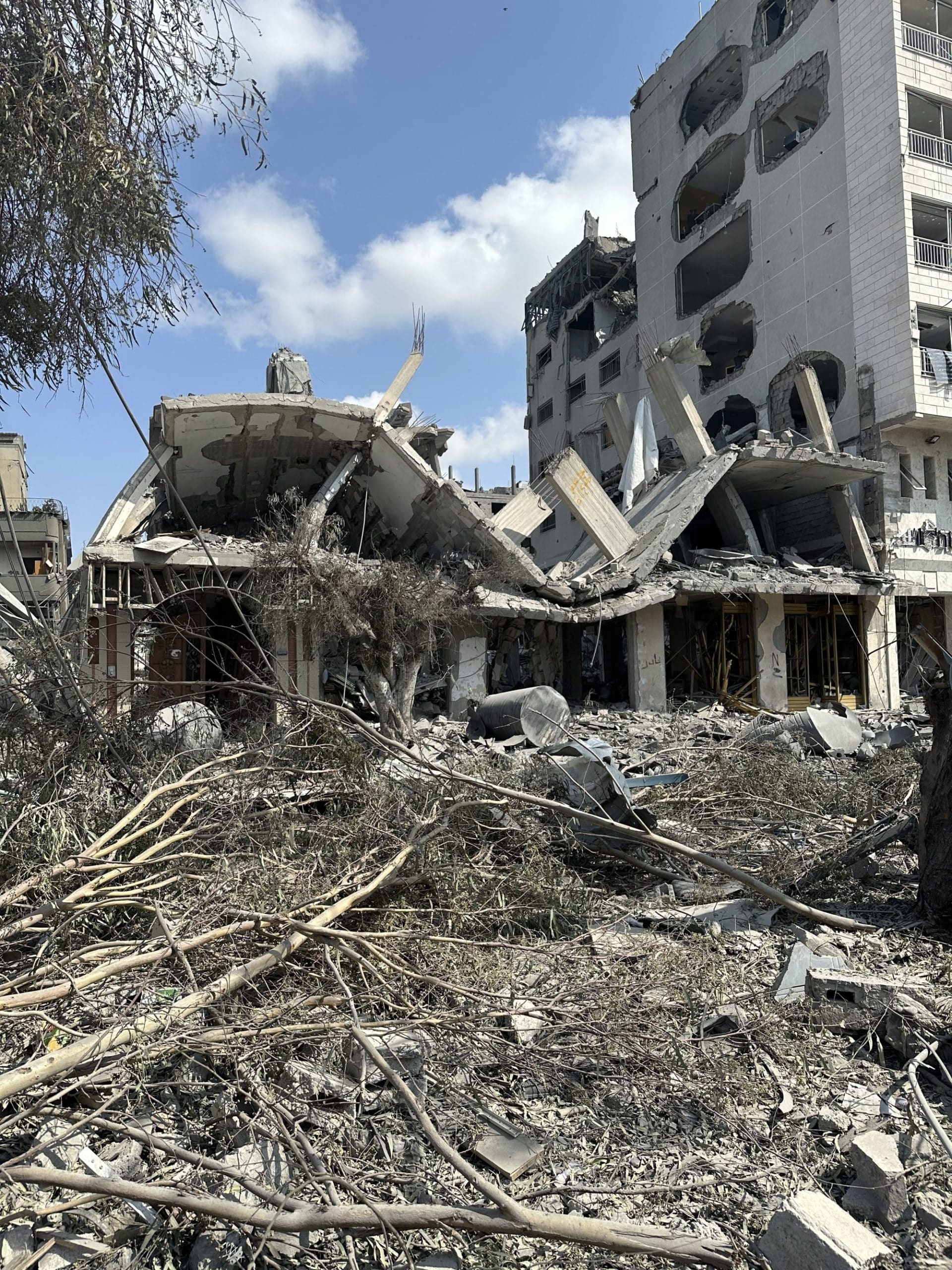
For Nadja Pollaert, Executive Director of Doctors of the World, “what we have seen is true for Syria, true for Ukraine, and true for Gaza. Often the first to be hit are healthcare facilities and civilian infrastructure. Unfortunately, it is a sad story that repeats itself.”
Mass displacements continue. In the Gaza Strip, the cumulative number of internally displaced persons continues to rise. Over half a million people have already moved to the southern part of the Gaza Strip, with more than two-thirds finding refuge in UNRWA schools.
Since October 19, most residents of the Gaza Strip no longer have access to drinking water provided by service providers or domestic water supplied through pipelines.
As an international humanitarian organization, we demand that humanitarian access, healthcare, medical evacuations, access to health centers and hospitals, as well as the protection of civilians and health and emergency personnel, be ensured in full compliance with international humanitarian law.
I support the affected populations.
“If the bombings do not stop, it is very difficult to transport humanitarian supplies and medicines. Will we be able to get people out of Gaza, the injured? Or will it just be a one-way trip under the bombs?” – ️ Nadja Pollaert
Our teams are assessing the needs of the populations to respond accordingly.
Doctors of the World has been present in Palestine since 1994 and has been developing its activities in the Gaza Strip since 2008.
- The teams are notably strengthening access to mental health and psychosocial support.
- They are also strengthening the capacities of medical personnel to meet the medical needs of the Palestinian population.
- The organization also provides an emergency response and long-term intervention in coordination with various institutional and civil society actors (training of local medical staff, provision of medical equipment and medicines, particularly in the field of orthopedic and trauma surgery).