Gaza & the occupied West Bank — Emergency medical care, reproductive health and psychosocial support since 2009.
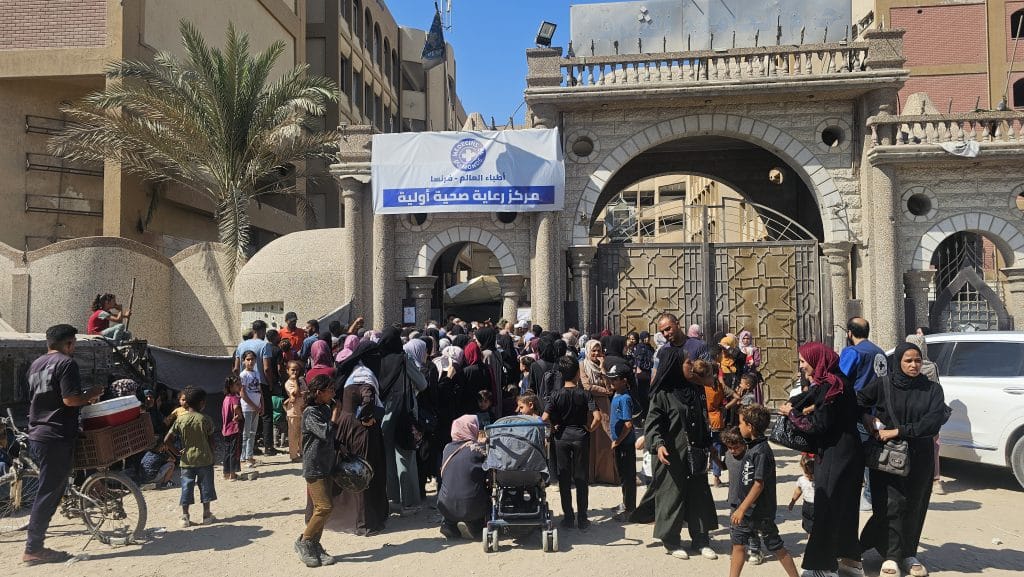
People displaced in the Gaza Strip
About 79% of the total population of Gaza
People killed, 70% of them women and children in Gaza
According to figures from the Gaza Ministry of Health
Attacks on the health system recorded since October 2023
Sources: WHO — data verified on the ground by MdM
Thirteen months of intense bombardment and more than 75 years of occupation have transformed Gaza. Médecins du Monde teams have worked since 2009 alongside Palestinian communities, as well as thousands of families in the West Bank, to protect access to health care.
The humanitarian situation has deteriorated dramatically since 7 October 2023. Teams on the ground are documenting the systematic destruction of health infrastructure, severe shortages of medicines and medical supplies, and the near-total collapse of the health system in Gaza.
The humanitarian catastrophe in the Gaza Strip is of unprecedented scale. Collapse of the health system, famine, water contamination and infectious diseases: living conditions have become incompatible with survival for a large part of the population.
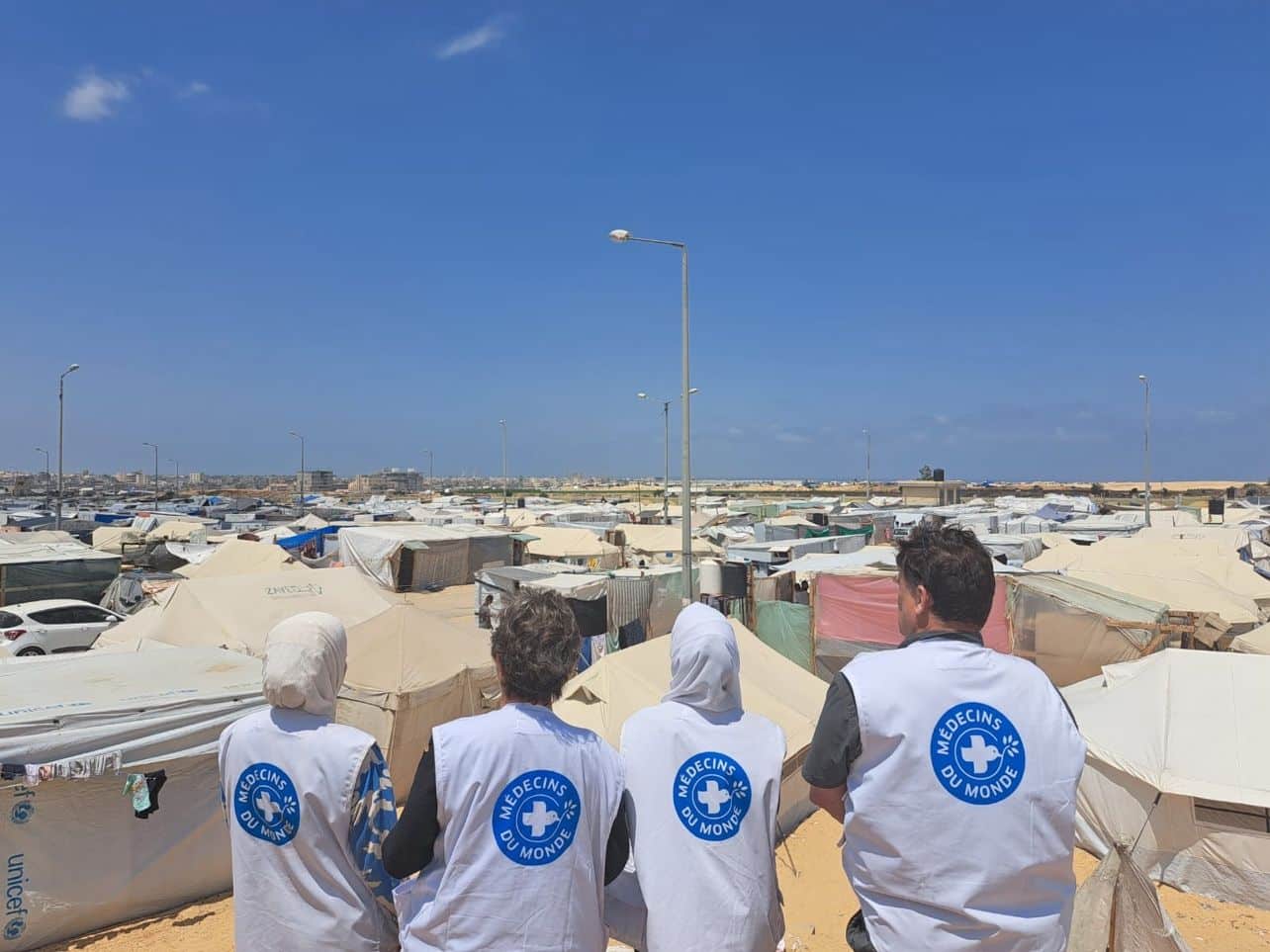
Photo: Doctors of the World
Forced to abandon their lands over 75 years ago, Palestinians have lived under Israeli occupation for more than 55 years. This tense situation has been compounded by the blockade of the Gaza Strip since 2007, a devastating war on this territory since October 2023, and a resurgence of violence in the West Bank and East Jerusalem. Israeli authorities now wish to ban 37 international non-governmental organizations from providing humanitarian aid to Gaza and the West Bank.
The Gaza Strip is one of the most densely populated territories in the world. Despite a ceasefire agreed in March 2025, Israeli authorities continue to bomb and restrict the delivery of humanitarian aid. 2.2 million Palestinian residents are on the brink of famine, in a territory where nearly 90% of the population is displaced and infrastructure is almost entirely destroyed. Between May and September 2025, more than one in five inhabitants was experiencing extreme famine.
Since the deadly Hamas attack on the civilian population in Israeli territory on October 7, 2023, civilians, humanitarian workers, and health facilities have been subjected to massive attacks and bombings by the Israeli army.
In Gaza, since that date, over 70,000 people have been killed, the majority of them women and children, and over 170,903 injured. 1.9 million people have been displaced (90% of the population), often multiple times, and more than 436,000 (90%) homes destroyed.
In this apocalyptic context, access to all basic services and humanitarian aid is drastically restricted by Israel.
There is a permanent shortage of medicines, consumables, and equipment. 60% of hospitals and 48% of primary care centers are only partially functional. The lack of electricity and access to food is a daily struggle. The health situation is catastrophic, and many preventable diseases and infections are emerging. According to the WHO, over 4,070 children are currently waiting to be evacuated from Gaza for medical reasons.
Moreover, humanitarian and health workers are targeted in attacks, and the teams of humanitarian organizations on the ground are working in extreme physical and psychological conditions, risking their lives to respond to the immense needs of the population.
Since October 2023, the West Bank has seen an increase in the number of incidents and a worsening security situation. 2025 has been one of the deadliest years for Palestinians in the West Bank, with 240 Palestinians killed by settlers and Israeli armed forces and over 830 injured, an average of two people per day.
The population lives in constant tension due to the proximity of Israeli settlements. Surrounded by a heavy military presence, they are subjected to searches, harassment, and systematic checkpoints, hindering movement and access to basic services, including health care.
Some settlers regularly attack Palestinian communities, who are victims of beatings, stone-throwing, gunfire, home damage, crop destruction, and even murder. In 2025, 37,000 people were forcibly displaced as a result of violence perpetrated by settlers and Israeli occupation forces.
“Cutting an umbilical cord yourself under gunfire: that is the unbearable daily reality for women in Gaza.”
— Field testimony, MdM team, October 2025
Since October 2023, Médecins du Monde has opened clinics and provided primary health care consultations in the seven health centres it manages in the Khan Younes and Deir el-Balah regions, treating chronic and communicable diseases in particular, and providing emergency first aid, sexual and reproductive health care, and mental health care. In 2025, nearly 388,356 consultations were provided, and 18 Palestinian health centres received support.
Despite the numerous obstacles related to the isolation of the Gaza Strip and administrative restrictions imposed by the Israeli authorities, the organisation has also endeavoured to supply medicines and medical equipment to its partners and the Ministry of Health.
In the West Bank, despite the severe restrictions imposed by the Israeli authorities on the movement of medical teams, Médecins du Monde provides primary health care in the isolated areas of the West Bank where patients have little or no access. These areas are served by a mobile clinic, which enables the management of chronic and communicable diseases, sexual and reproductive health issues, and mental health care.
In the regions of Nablus, Ramallah, Jenin, Tulkarem, Tubas, Salfit, and Qalqilya, Médecins du Monde offers mental health and psychosocial support services to victims of violence by settlers and Israeli armed forces. This year, nearly 17,598 mental health and psychosocial support consultations were conducted. The organisation’s mobile teams visit communities to assist individuals who have been victims of attacks or feel threatened, providing a listening ear and referring them to specialised care if needed. In total, 2,653 patients were referred to specialised services.
Furthermore, 816 medical personnel and community first responders were trained in detecting psychosocial disorders, to treat them and, if necessary, facilitate referrals to appropriate health facilities.
A mental health referral system developed by Médecins du Monde in collaboration with the Ministry of Health was adopted as a national official tool.
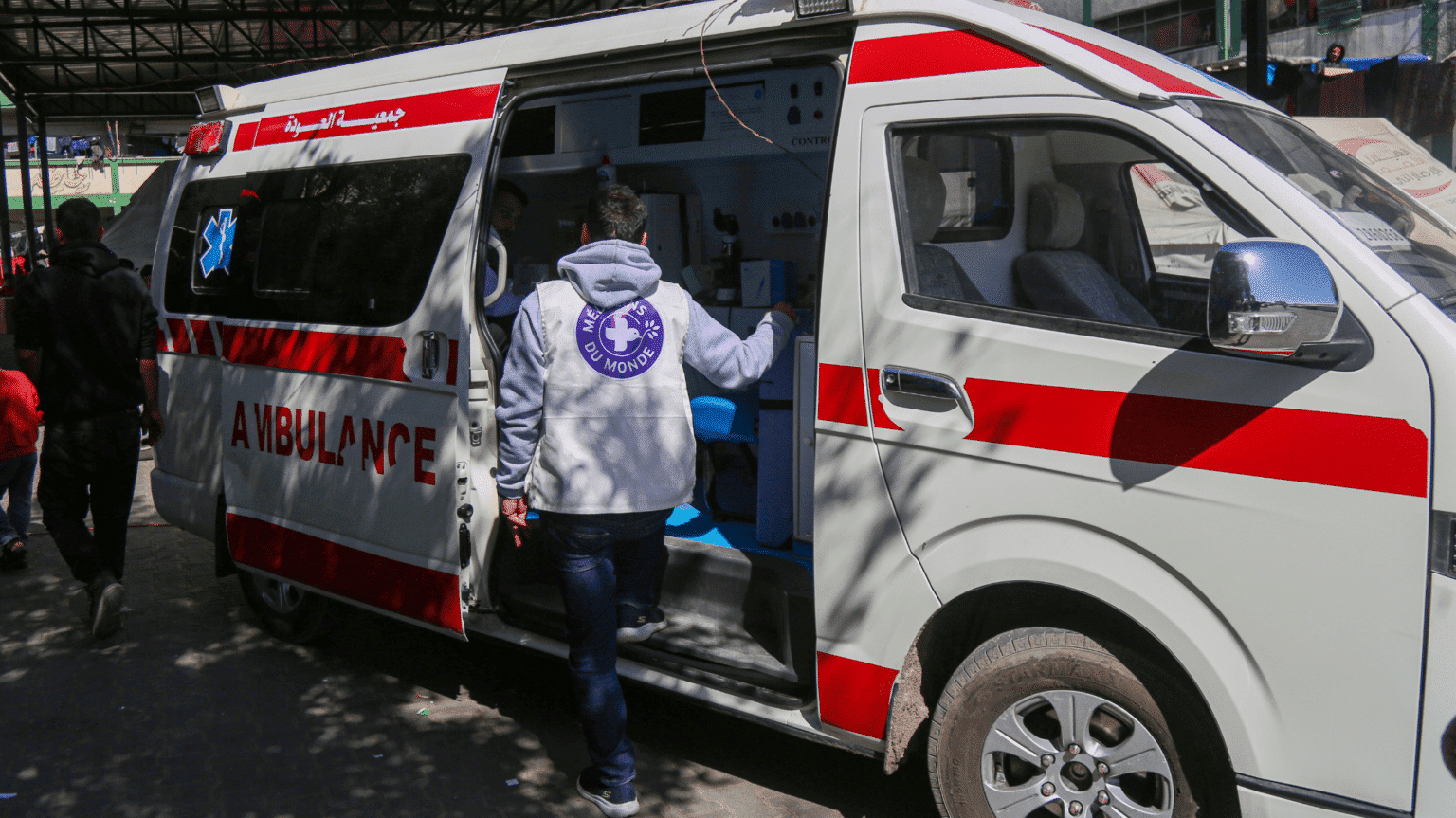
Photo: Doctors of the World
Since March 1999, Médecins du Monde has been working in Palestine and has carried out missions following each escalation. This time, the scale of the damage exceeds anything we have ever seen. Our organization is strongly calling on the international community to act.
Médecins du Monde is calling for an immediate and permanent ceasefire, an end to arms transfers to Israel, the lifting of the humanitarian blockade, and the protection of healthcare personnel and medical infrastructure in accordance with international humanitarian law.