
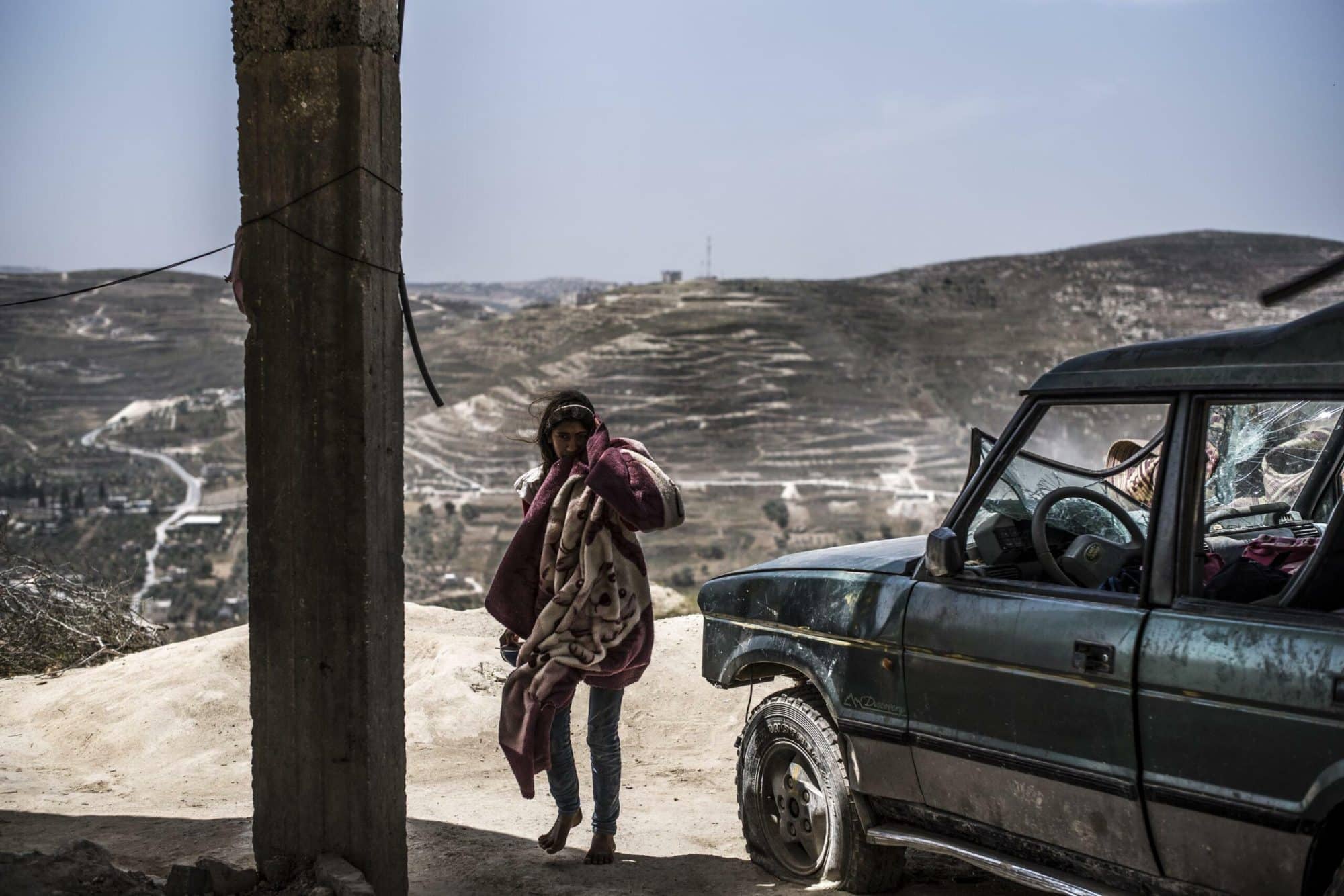
Increase in settler violence since October 7
While the international community’s attention is focused on the worsening humanitarian and public health catastrophe in Gaza without a ceasefire being implemented, serious violations of International Humanitarian Law (IHL) and Human Rights are being committed in the West Bank by Israeli settlers.
According to OCHA, 828 people, including 313 children, have been forcibly displaced from their lands due to settler violence or movement restrictions, while humanitarian actors are prevented from accessing these populations.
Furthermore, 121 Palestinians, including 33 children, have been killed by Israeli forces and settlers since October 7, marking a worrying increase in the number of civilian casualties in the West Bank.
- 828 people have been forcibly displaced from their lands
- 121 Palestinians have been killed in the West Bank since October 7
Doctors of the World, which provides emergency mental health and psychosocial support (MHPSS) to the Palestinian civilian population affected by incidents related to the occupation in the West Bank, expresses its deep concern over the extremely high levels of settler violence during this month of October.
While OCHA recorded an average of 3 settler violence incidents in the previous months of 2023, this number has risen to 7 since the beginning of October.
30% of these attacks resulted in casualties or material damage, with firearms being used in acts of threats, intimidation, and direct shootings.
The use of terror, with complete impunity
The forced displacement of Palestinian families from pastoral communities in Area C of the West Bank due to attacks by Israeli settlers is a major concern.
15 communities have been fully or partially forcibly displaced since the beginning of October, affecting up to 828 people.
As the number of settler attacks has continued to rise this year, abuses against Palestinian civilians by settlers are becoming more frequent and more violent.
Israeli settlers are using terror against Palestinians, entering their communities armed, committing physical assaults, threatening to kill and torture families if they remain on their lands, destroying property and civilian infrastructure, and targeting the community’s livelihoods by bulldozing their lands, destroying animal shelters, or stealing livestock.
These intensified assaults perpetrated by settlers are committed with complete impunity and often with the support of the authorities.
Restricted access to humanitarian aid
Communities in Area C have long experienced a sense of insecurity, fear, and instability as the violence from neighboring settlers continues to escalate.
While they desperately need protection and support, particularly psychological, in the context of the current rise in settler attacks, Doctors of the World faces restrictions in accessing vulnerable communities requiring an MHPSS response.
Over the past three weeks, movement restrictions have multiplied, further fragmenting the West Bank, closing urban centers, and isolating rural communities from access to essential services.
While some humanitarian operations are completely hindered by these movement restrictions, the use of potential alternative routes to reach isolated communities is limited by the security situation on the roads, which has been severely affected by the rise in settler violence.
According to OCHA, 43% of all settler-related displacement cases since January 2022 have occurred since October 7, 2023.
These figures highlight an unprecedented acceleration in the forced displacement of Palestinians.
Taking advantage of the diplomatic and media attention on the hostilities in Gaza and Israel, land seizures and the displacement of pastoral communities in the West Bank are increasing rapidly.
The international community must act
If no action is taken, many more Palestinian civilians living in Area C risk being forcibly displaced due to settler violence.
As a humanitarian organization, Doctors of the World urgently calls on the international community to:
- Demand that full, safe, and unhindered humanitarian access be restored, particularly for isolated communities targeted by settler violence. Current movement restrictions in the West Bank must be lifted as they limit humanitarian access for civilians as well as their access to basic services.
- Exert all possible pressure on the Israeli government to protect communities in the West Bank at risk of forced transfer. The Israeli government must use its executive, legislative, or judicial powers to take all necessary measures to protect Palestinians and prevent settler violence directed against them.