
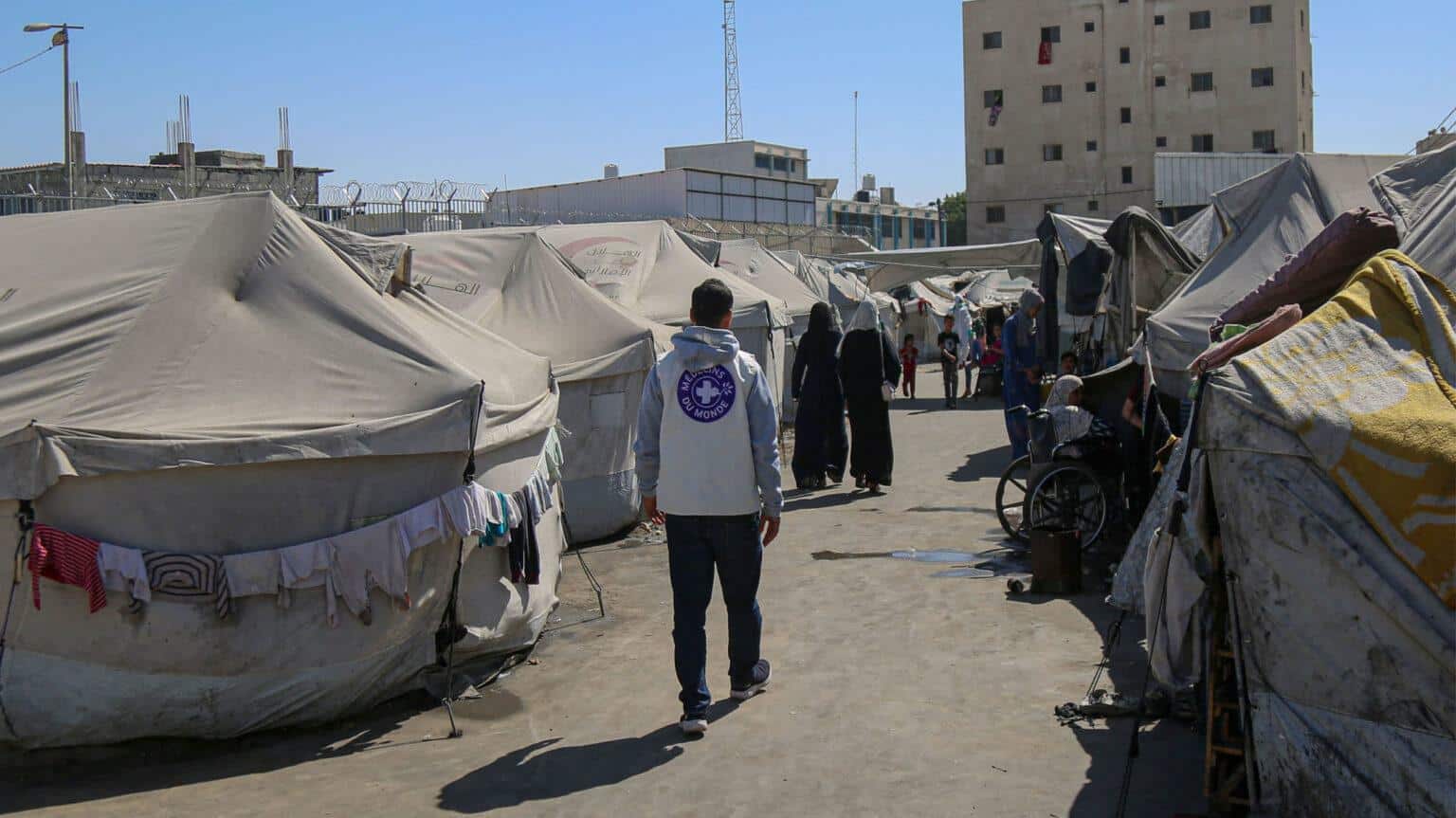
The bombing of a United Nations school used as a shelter in Nuseirat yesterday, as well as the massacres in al-Mawasi in the so-called «safe zone» and in al-Shati in the city of Gaza on July 13, are the latest Israeli attacks striking civilians. The Israeli army issued new «evacuation orders» for the Khan Younis area and the city of Gaza, leading to further massive forced displacements and concentrating Palestinians in ever-smaller, overcrowded zones with no resources to meet their basic needs.
These recent events worsen the humanitarian catastrophe even as NGOs continue to face obstacles imposed by the ongoing Israeli ground military operations. Organizations warn that the entry of aid into Gaza has seriously deteriorated since the ground offensive in Rafah at the beginning of May.
“Third states must exert real pressure on the parties to the conflict to achieve an immediate and lasting ceasefire.”
Crossing points in the south are completely closed or logistically inaccessible due to deteriorating security conditions. Doctors of the World (MdM), Médecins Sans Frontières (MSF), Norwegian Refugee Council (NRC), Première Urgence Internationale (PUI), Mercy Corps, Save the Children, CARE, ActionAid International and Humanity & Inclusion (HI) report that tons of much-needed aid, intended to be delivered via the southern route, have been blocked for weeks, even months. In the north, aid delivery remains limited. While transporting goods between Amman and northern Gaza should not take more than six hours, it took Oxfam over five weeks to bring 1,600 food parcels into the northern part of the enclave.
“Third states must exert real pressure on the parties to the conflict to achieve an immediate and lasting ceasefire. As NGOs have been repeating for months, this is the only way to provide humanitarian aid, protect and save lives in Gaza.” Dr. Jean-François Corty, President of Doctors of the World
Through concrete examples, NGOs explain in this snapshot how their movements are restricted and denounce the dangers they face daily to reach people affected in the Gaza Strip: military checks of humanitarian personnel via cameras or drones at Israeli checkpoints, the obligation to inform Israeli authorities of their movements even within the so-called «humanitarian» zone, or staff forced to use donkey-drawn carts due to the fuel shortage.
Our concern for the lives of our teams only grows as their safety cannot even be guaranteed within our humanitarian premises. On June 8, a colleague from Humanity & Inclusion died after the Israeli army indiscriminately bombed her home in southern Deir al-Balah. MdM and MSF were forced to leave health facilities due to Israeli attacks and the so-called «evacuation orders». These are just a few recent examples of the lack of respect by parties to the conflict for their duty to ensure the protection of humanitarian workers.
After nearly ten months of destructive war, it is extremely urgent that third states recognize they have failed in their obligations to ensure respect for international humanitarian law and take concrete action to achieve an immediate ceasefire in Gaza.
Photo: MdM Switzerland