
<h1>Haiti: An Unprecedented Humanitarian Crisis</h1>
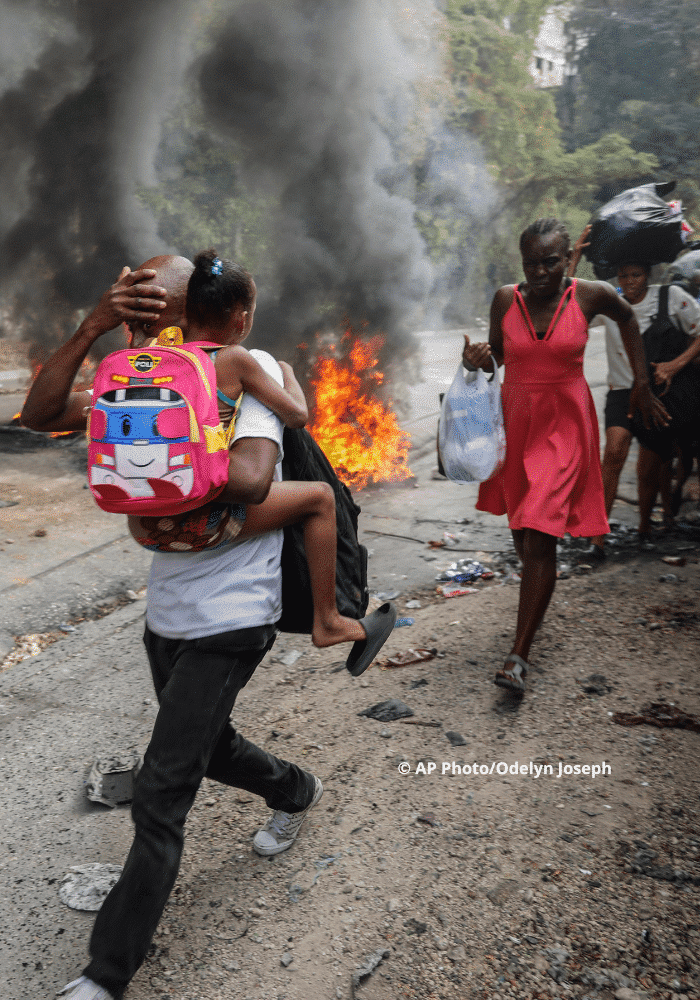
The attacks carried out in Haiti by armed groups have spread terror among the civilian population and led to the mass displacement of over 66,000 people, who are now displaced with host families, in schools, churches, or public spaces, without sufficient access to water, health care, or minimal protection. According to data collected from displaced persons in the Mirebalais area, 93% of those interviewed reported being informed of protection incidents in their areas of origin.
The most frequently reported incidents include:
- cases of murder or execution of relatives (68%)
- disappearances (64%)
- threats to physical integrity (46%)
- reports of sexual violence (11%)
- children no longer attending school (61%).
Some health facilities have been directly targeted or forced to close, further worsening the situation. All segments of the population are exposed to various forms of violence, although their ability to cope varies significantly.
<h1>Essential Infrastructure Targeted</h1>
Other attacks were also carried out in Kenscoff and Furcy last February (and continue to this day), causing the displacement of over 3,000 people, including 721 children. Basic community services have been suspended; essential infrastructure, such as schools and health centers, has been severely affected, and the resumption of their activities has been compromised. Movement restrictions imposed by armed groups severely limit residents’ freedom of movement, making access to basic necessities difficult and risky.
Humanitarian access has become extremely difficult due to persistent insecurity, with some areas currently inaccessible. Additionally, Kenscoff is the main supplier of agricultural goods to the city of Port-au-Prince. Approximately 65% of crops have already been burned or looted during these attacks, according to reports from three of the largest agricultural cooperatives on site.
The remaining fields are now also threatened by the continued advance of armed groups, raising concerns about a deterioration in the quantity and access to food supplies for the populations of the capital, in a context of food insecurity that is already extremely worrying.
<h1> The Capital in a Catastrophic State </h1>
The situation in the metropolitan area of Port-au-Prince is also becoming increasingly critical. Offensives have targeted areas previously relatively spared, such as Delmas, downtown Port-au-Prince, and Pétion-Ville. Between January and March 2025, at least 1,617 people were killed, and more than 750 injured, marking a significant deterioration in the human rights situation. As of April 4, 2025, over 89,000 internally displaced persons (21,531 households) were recorded in 87 displacement sites across the metropolitan area of Port-au-Prince. The total number of displacement sites in Haiti has increased from 119 to 228, a 92% rise, driven by armed violence. The neighborhoods of Carrefour-Feuilles, Turgeau, Saint-Martin, and Solino have seen significant population declines due to mass displacements. Meanwhile, areas like Bellevue-Chardonnière in Pétion-Ville have seen their populations increase due to the influx of displaced persons.
NGOs operating in Port-au-Prince regularly find themselves blocked by fighting, sometimes exposed to crossfire.
<h2> Persistent insecurity prevents the continuous deployment of humanitarian assistance, compromising access to essential services for the population; it is the most vulnerable communities that pay the heaviest price. </h2>
<h1> The Disastrous Consequences of the Suspension of Certain Funding </h1>
Following the suspension of certain funding, NGOs are overwhelmed by demand while their response capacity is limited. This inability to meet needs is creating community tensions and impacting the long-term acceptance of these organizations. For example, it is estimated that a person living in a displacement site receives an average of only three liters of water per day, well below the minimum recommended in emergency situations, which is fifteen liters per day. Health and protection services are also highly insufficient to meet constantly increasing demand.
The growing insecurity in the metropolitan area and the increasing presence of armed groups in the Centre and Artibonite departments severely restrict humanitarian access. The ability of organizations to respond to urgent needs is seriously compromised, especially as available financial resources require difficult trade-offs in operational modalities.
This reality directly threatens the continuity of assistance in the most critical areas.
<h2> Nearly 25% of displaced persons are children, often living in precarious conditions without adequate access to food, drinking water, sanitation, or medical care. </h2>
Humanitarian organizations operate according to fundamental principles of neutrality, independence, and impartiality, without political, ethnic, religious, or military bias. Their sole mission is to save lives, alleviate suffering, and protect human dignity, regardless of the status and origin of those affected.
The ICLF (Inter-Organizational Liaison Framework) emphasizes that all parties to the conflict have an obligation, at all times, to distinguish between the civilian population and combatants and to take all possible precautions to spare civilians during hostilities. The ICLF also stresses that NGOs must never be considered targets. Attacking or hindering their work amounts to compromising the population’s access to vital services and constitutes a serious violation of international law.
In the face of this worsening humanitarian crisis, the ICLF:
- Calls on armed actors to fully respect the humanitarian space, to guarantee safe corridors for displaced populations and humanitarian teams, and to immediately cease attacks against civilians and essential infrastructure;
- Calls on all stakeholders to protect the population and facilitate humanitarian access, particularly in areas currently inaccessible or at risk;
- Calls on the humanitarian community and coordination partners to develop concerted solutions to secure access and ensure the continuity of emergency operations in affected areas;
- Calls on donors to mobilize urgently and flexibly, adapting funding mechanisms to enable NGOs to intervene quickly and effectively in an extremely volatile context.
ICLF members remain committed to responding to the urgent needs of affected populations, despite constraints, and call for coordinated, sustained action that respects human rights and humanitarian law to prevent further deterioration of the situation.
About the ICLF:
The Inter-Organizational Liaison Framework (ICLF) is a coordination platform for NGOs in Haiti. It brings together over 60 national and international NGOs operating across the country. Its aim is to enhance the effectiveness of humanitarian and development aid through information sharing and collaboration among humanitarian actors.