
<h1> A Strong Opening, Clear Expectations from Youth </h1>
The first day marked a decisive turning point. Organized in a demanding yet opportunity-rich regional context, this meeting brought together representatives from governments, civil society, technical partners, international institutions, and, most importantly, youth.
From the outset, the messages were unambiguous:
- Refocus policies on the real needs of youth.
- Link political commitments, concrete funding, and accountability.
- Institutionalize comprehensive sexuality education within educational and health systems.
- Genuinely involve youth in decision-making processes.
As Issouf Maïga, General Coordinator of Médecins du Monde France – Burkina Faso Mission, emphasized, “Transformation requires an intersectoral and evidence-based approach.”
<h1> Promising Regional Commitments for Sexual Health, but Persistent Challenges </h1>
During the technical sessions, several major issues were raised:
- Strong regional political commitments (e.g., the April 6 Declaration in Congo), but still poorly translated into operational action.
- A firm commitment to strengthen comprehensive sexuality education and youth participation, but few harmonized monitoring systems.
- Persistent structural challenges: early pregnancies, gender-based violence, female genital mutilation, substance use, etc.
- Intersectoral coordination still too weak, hindered by political and cultural tensions.
<h1> National Stakeholders’ Perspectives: Between Concrete Progress and Systemic Obstacles </h1>
The session dedicated to Benin highlighted several lines of action:
- Massively train teachers and healthcare providers from the initial training stage.
- Digitalize educational content to better reach youth.
- Establish structured youth participation, not just symbolic.
- Ensure sustainable public funding, rather than relying on external partners.
A shared observation by representatives from the ministries of health and education: without national budgetary commitment, progress will remain fragile.
Key Recommendations to Build on the Momentum
At the close of this first day, five action levers were collectively identified:
- Establish a harmonized regional accountability framework for commitments in West and Central Africa.
- Share reports from national consultations with field actors.
- Create a regional multi-stakeholder platform, including civil society and youth.
- Advocate for dedicated national budget lines for comprehensive sexuality education and the sexual and reproductive health and rights of adolescents and youth.
- Fund behavioral research to deconstruct sociocultural barriers.
What Now?
At Médecins du Monde Canada, we firmly believe that adolescents and youth must be at the heart of public policies that concern them. This is not just a matter of health or education; it is a matter of justice, dignity, and the future.
We will continue to mobilize, document, and amplify their voices, in collaboration with our partners and teams in the field.
“What you do for me, without me, you do against me.” – A powerful reminder heard and echoed throughout this workshop.
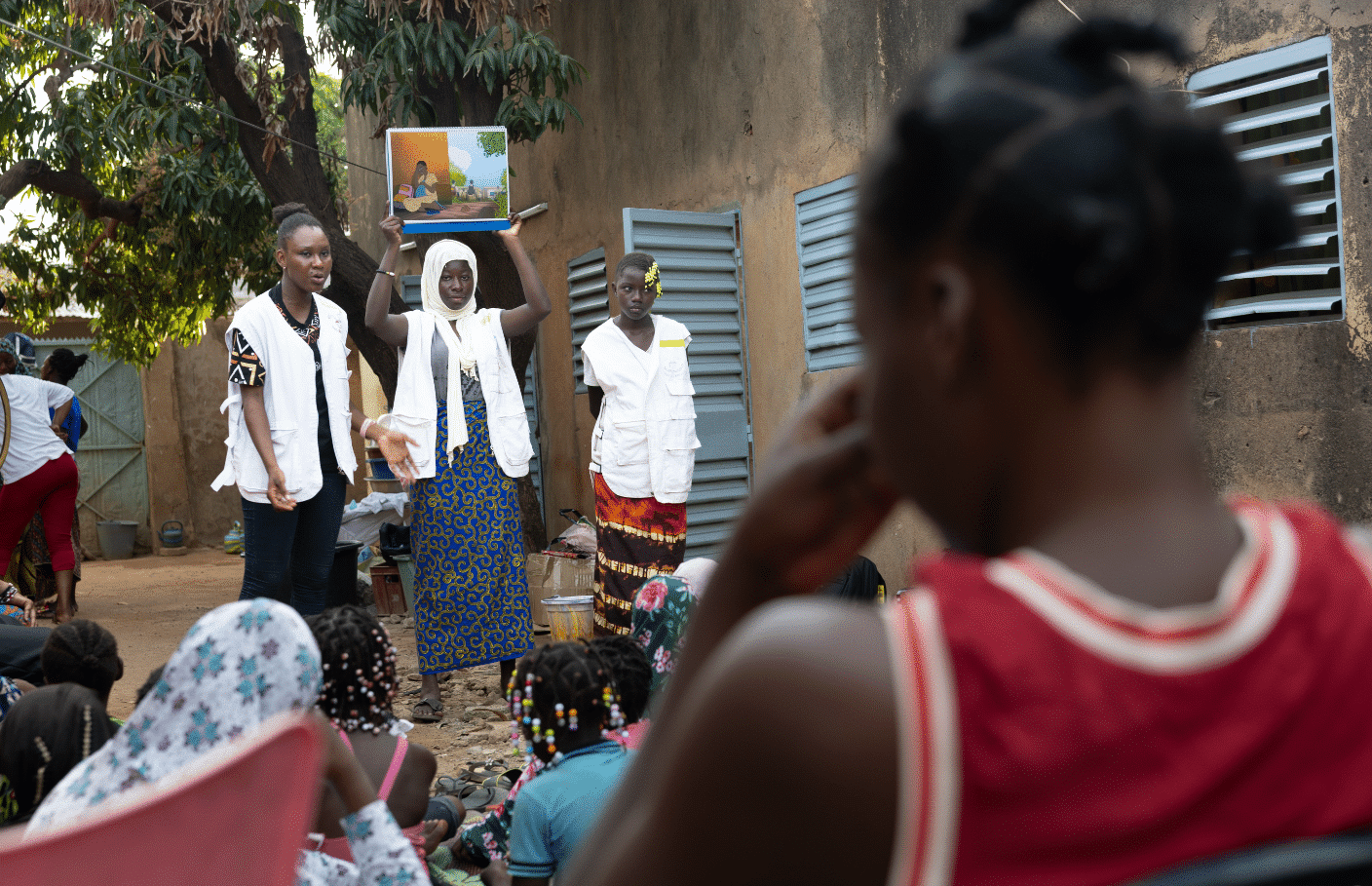
This workshop took place as part of the RESPECT project to support the sexual and reproductive health and rights of adolescents and youth, led by Médecins du Monde in Benin, Burkina Faso, and Haiti, with the support of Global Affairs Canada.