
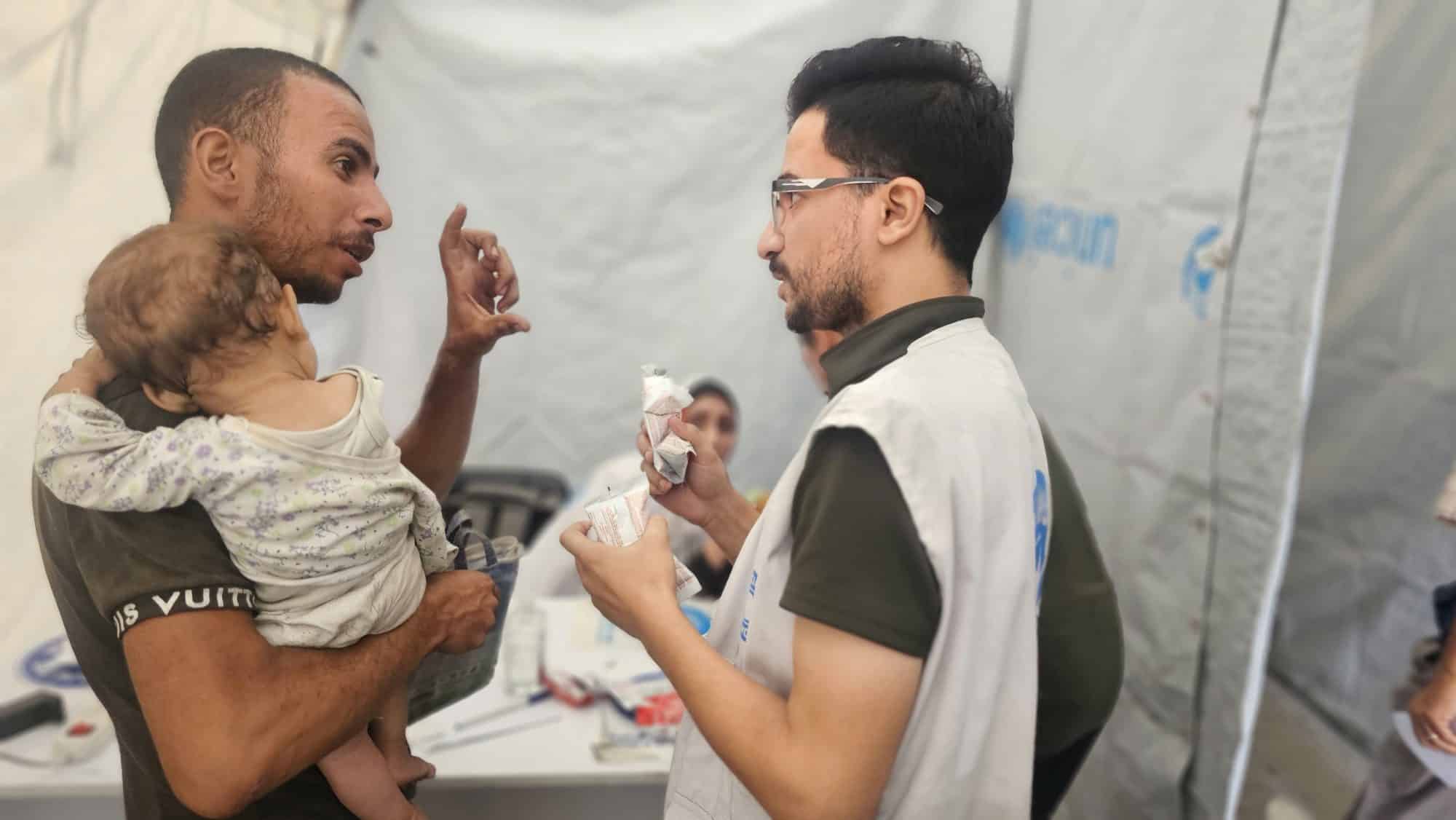
Between 10 and 21 October 2025, 17 international NGOs had their emergency aid deliveries, including water, food, tents, and medical supplies, refused entry into Gaza.
94% of the refusals issued by the Israeli authorities concerned international NGOs. Three-quarters of these refusals were motivated by the fact that the organisations were “not authorised” to deliver humanitarian aid to Gaza. This includes agencies that have long held official registration with both the Palestinian and Israeli authorities and are legally permitted by them to continue their activities while new registration processes are underway.
These humanitarian organisations are neither new nor inexperienced. They are trusted partners, present in Gaza for decades. Such targeted exclusions clearly show that the Israeli authorities continue to restrict and politicise aid, in violation of both the terms and the spirit of the ceasefire agreement.
The equipment is ready, the staff are equipped and prepared to intervene on a large scale. What we need now is access. The Israeli authorities must respect their obligations under international humanitarian law and the provisions of the ceasefire agreement.
Between 10 and 21 October, 99 requests for aid deliveries to Gaza submitted by international NGOs were rejected, while six requests filed by UN agencies were also refused. The aid blocked by the Israeli authorities includes tents and tarpaulins, blankets, mattresses, food and nutritional products, hygiene kits, sanitation supplies, mobility aids for persons with disabilities, and children’s clothing; all these items should be allowed to move freely during the ceasefire.
At the end of September, three out of four approval requests rejected by Israel came from international NGOs. These refusals have increased since the start of the total siege in March and the implementation by Israel of the new registration system for international NGOs.
The announcement of the ceasefire was welcomed as a moment of much-needed relief and respite for the Palestinian population, but repeated violations underscore its fragility.
The persistence of blockages on the entry of humanitarian aid is deeply alarming. After more than two years of relentless bombings — which have killed dozens in just the past week — and in the face of resulting deprivation, forced displacement, and famine, the blocking of humanitarian expertise and supplies undermines the collective effort to save lives.
Nearly $50 million worth of essential goods from operational international NGOs — food, medical supplies, hygiene products, and shelter materials — remain stranded at crossing points and in warehouses, prevented from reaching those in need. Palestinians in Gaza are now preparing to face winter, as many live in makeshift shelters without insulation, heating, clean water, or sanitation. Time is running out: without immediate and unhindered access, the number of preventable deaths will rise.
These restrictions deprive Palestinians of vital aid and undermine the coordination of the humanitarian response system in Gaza, which relies on collaboration between local organisations, national institutions, UN agencies, and international NGOs.
Humanitarian access is a legal obligation under international law, not a concession linked to the ceasefire. The ceasefire must ensure a lasting end to hostilities and guarantee the free, safe, principled, and continuous movement of aid, in accordance with the rights of Palestinians to security, dignity, and self-determination. Anything less risks turning this hope into yet another unfulfilled promise. The new registration system implemented by Israel must be abandoned to allow aid to flow freely.
Signatory organisations operating in Gaza, directly or through partners:
- ACS Associazione Cooperazione e Solidarieta’
- Action Against Hunger (ACF)
- Action For Humanity
- ActionAid Denmark
- ActionAid International
- American Friends Service Committee (AFSC)
- CESVI Fondazione – ETS
- CISS – Cooperazione Internazionale Sud Sud
- DanChurchAid
- Diakonia
- Finn Church Aid
- Glia
- HEKS/EPER (Swiss Church Aid)
- HelpAge International
- Humanity & Inclusion – Handicap International
- Humanity First UK
- IDEALS
- Islamic Relief Worldwide
- Japan International Volunteer Center (JVC)
- Médecins du Monde International Network (MdM)
- Médecins Sans Frontières
- MedGlobal
- Medical Aid for Palestinians (MAP)
- Medico International
- Mennonite Central Committee
- NORWAC-Norwegian Aid Committee
- Norwegian Church Aid
- Norwegian People’s Aid
- Norwegian Refugee Council
- Oxfam
- Palestinian Medical Relief Society
- People in Need
- Plan International
- Première Urgence Internationale
- Secours Islamique France (SIF)
- Terre des Hommes Italy
- Terre des hommes Lausanne
- The Center for Mind Body Medicine – CMBM
- The Middle East Children’s Alliance
- War Child Alliance
- Welthungerhilfe