
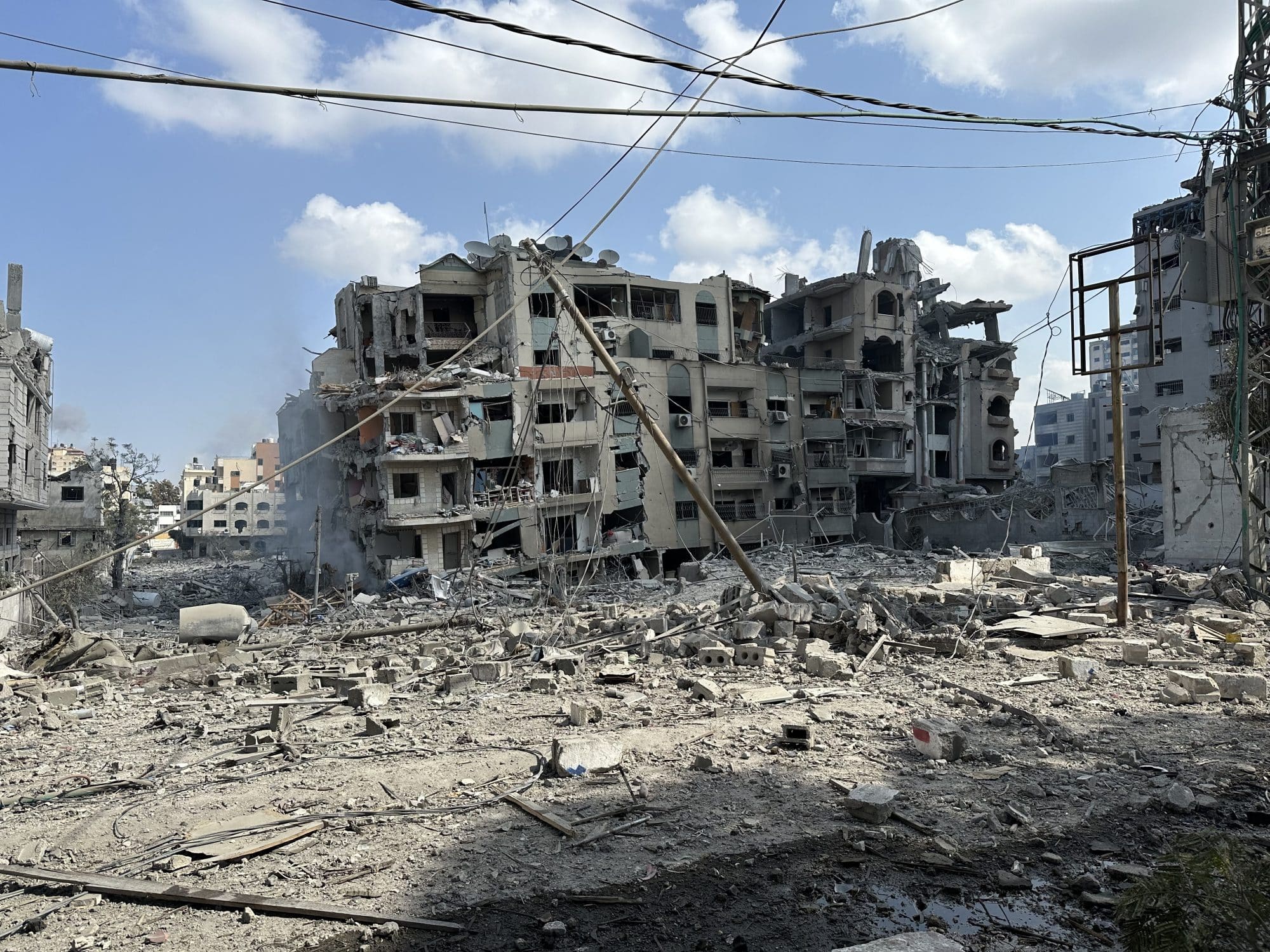
“EVERY MINUTE SPENT IN GAZA WITHOUT A CEASEFIRE COSTS MORE HUMAN LIVES”
International humanitarian organizations, particularly United Nations agencies, have been extremely clear: what is urgently needed in Gaza is a ceasefire. As the United Nations Secretary-General emphasized, “Gaza is becoming a graveyard for children,” with 68% of the alarming number of civilians killed being women and children. The entire civilian infrastructure, and particularly the health system, requires a massive humanitarian response, the scale of which demands a complete halt to hostilities.
A few hours of pause in the bombings cannot be considered “humanitarian” as they do not allow for the delivery of the large volumes of life-saving aid desperately needed by 2.2 million people. Every minute spent in Gaza without a ceasefire costs more human lives. The narrative suggesting that a few hours of pause in the bombings would constitute an adequate humanitarian response is false and dangerous.
“PAUSES” ARE INSUFFICIENT GIVEN THE AMOUNTS OF AID REQUIRED
Numerous sources, including OCHA, have repeatedly reported that Israeli airstrikes have hit hospitals. Health facilities are granted special protection under International Humanitarian Law (IHL) and must never be considered military targets, particularly when they have become emergency shelters for over 100,000 displaced persons. The amounts of aid required to support the damaged, overcrowded, and under-resourced health infrastructure in Gaza demand that permanent and safe humanitarian access be ensured. Delivering aid during such “pauses” can only be extremely insufficient given the current humanitarian and public health catastrophe.
Furthermore, it appears that these pauses will only apply to certain areas of the enclave and aim to allow the population to move from the north of the Gaza Strip to the south through “corridors.” IHL insists on the principle that “the displacement of the civilian population must not be ordered for reasons related to the conflict.” Over 1.5 million of Gaza’s 2.2 million inhabitants are now displaced. Israeli military orders to evacuate civilians from northern Gaza are leading to severe overcrowding in the south, which the already exhausted civilian infrastructure cannot support. Consequently, these pauses may only increase mass displacements from the North and worsen population concentration in the South, with disastrous consequences in terms of resource shortages and the spread of infectious diseases. As stipulated in the Fourth Geneva Convention, civilians must be allowed to return after the cessation of hostilities.
URGENT HUMANITARIAN NEEDS
Full, safe, and unhindered humanitarian access cannot be separated from the call for an immediate ceasefire. Humanitarian aid and medical services remain crucial for the population of Gaza, whose survival is threatened not only by hostilities but also by the lack of drinking water, food, the spread of diseases due to overcrowding, the lack of medical supplies to treat injured patients and those suffering from medical conditions, as well as the general collapse of civilian infrastructure.
Humanitarian organizations must immediately be able to reach all civilians in Gaza safely and without interruption in aid delivery. Additionally, the total siege and supply interruptions imposed by the Israeli government since October 9 must be urgently lifted, as they only further exacerbate the humanitarian situation in Gaza. It is both a moral responsibility and a legal obligation of States, as signatories to the Geneva Conventions, to immediately trigger what is necessary to protect civilian lives in Gaza: compelling the warring parties to an immediate ceasefire.