On November 9, 2023, it was announced that Israel had agreed to implement “humanitarian pauses” of four hours in Gaza to move civilians from northern Gaza to the south. Prior to this, Israel had already ordered the evacuation of the civilian population to the south. Additionally, several unilateral proposals aimed at establishing “humanitarian pauses,” “humanitarian corridors,” and “safe zones” in Gaza were expressed in the media and during speeches by world leaders. The resolution adopted on November 15 by the UN Security Council, which focuses on children and humanitarian needs, also references some of these terms, but it does not provide any measures allowing the Council to monitor or implement these provisions. Furthermore, the resolution was not accepted by the parties on the ground.
While efforts to save lives are commendable, the terminology and public statements describing measures intended to protect civilians do not reflect the realities of the current situation on the ground. Around the world, hundreds of civil society organizations, including humanitarian agencies in the Occupied Palestinian Territory (OPT) and human rights advocacy groups, assert that an immediate ceasefire remains the only realistic and effective way to alleviate suffering and save lives.
The reality of “truces” and “corridors”
The announcements:
-
On November 9, 2023, “humanitarian pauses” of four hours in Gaza to move civilians from northern Gaza to areas south of Wadi Gaza. Despite the use of the term “humanitarian,” there is no indication that the sole purpose is to protect civilians from ongoing hostilities.
-
The term “humanitarian corridor” was used to describe the few routes planned for the movement of civilians from northern Gaza to areas south of Wadi Gaza, which the Israeli military claims are safer for civilians.
-
On November 15, 2023, the UN Security Council adopted Resolution (2712) calling for “urgent and extended humanitarian pauses and corridors.”
The reality on the ground:
-
“Truces,” defined as a suspension of hostilities by all parties, including bombings, shelling, artillery fire, and clashes throughout Gaza, have not taken place.
-
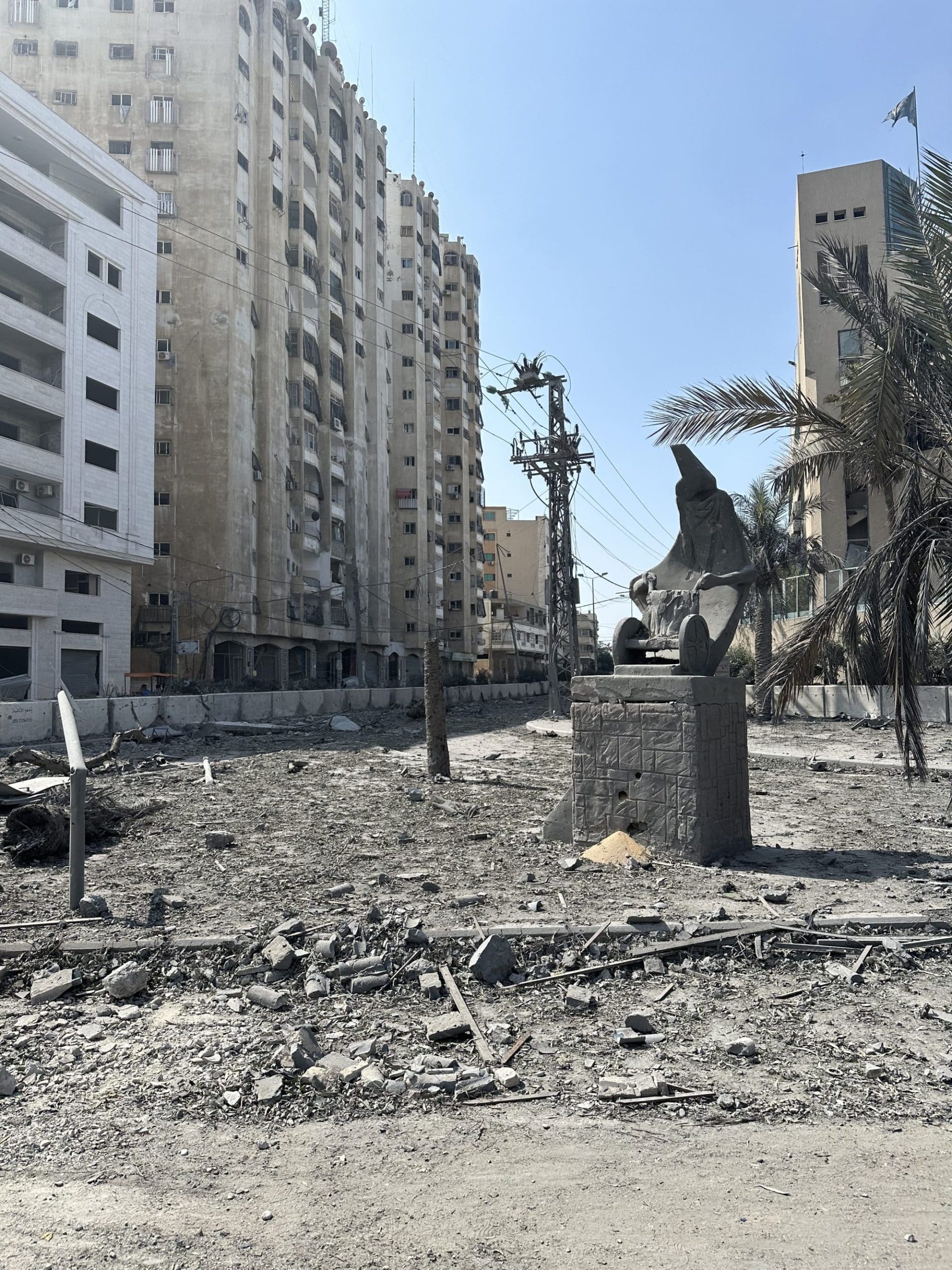
Two one-way routes (Salah al-Din Road from Gaza and the coastal road of the Gaza Strip) were designated by Israel to compel civilians to move from northern Gaza to areas south of Wadi Gaza. Bombings, shelling, and sniper fire have been reported, aimed at obstructing these designated routes and disrupting movements.
-
These routes do not facilitate, and were never intended to facilitate, the provision of humanitarian aid in northern Gaza or the smooth and secure evacuation of civilians in accordance with international humanitarian law.
-
While thousands of families have managed to reach areas south of Wadi Gaza, others have been unable or unwilling to use these routes: people with disabilities, the elderly, sick, or those with reduced mobility, for example. In many cases, families attempted to use these routes but had to turn back and return to Gaza due to intensive bombings. Displacements of unaccompanied minors and separated families have been observed.
-
Public statements made by senior Israeli officials about the intention to deport the civilian population from the occupied territory of Gaza to Egypt would be incompatible with the prohibition of forced transfer and deportation and would constitute a serious violation of international law.
-
Forced displacement without security guarantees or the possibility of return, and without addressing the needs of the protected population, risks being considered a forced transfer, which constitutes a serious violation of international humanitarian law and a war crime.
-
The Rafah crossing between Egypt and Gaza is currently the only viable route for transporting limited aid into Gaza. These efforts have been significantly hindered by slow and cumbersome processes, a lack of fuel, and the closure by Israel of all other crossing points. As a result, humanitarian agencies are unable to provide assistance based on the humanitarian needs of the Gazan population, including in the south.
-
No aid has been distributed by the UN and humanitarian organizations in the north of Wadi Gaza since November 7. Before October 7, three crossing points (Rafah, Erez, and Kerem Shalom) were used for commercial and humanitarian purposes. Humanitarian organizations have called for their reopening.
“Safe zones,” “Humanitarian zones,” and related terms
The announcements:
- On October 13, Israeli forces ordered the displacement of civilians from northern Gaza to areas south of Wadi Gaza, indicating that they would be safer there, without providing any guarantees regarding the safety of civilians during transit or their return home once hostilities in the area had ended.
- Over the past few weeks, several Israeli officials have publicly mentioned the establishment of a “humanitarian zone” for civilians, giving the impression that they would be safe and receive aid if they went there. This zone, approximately 1 km wide and 14 km long, is located in the city of Al-Mawasi, in the south.
- On November 15, Israeli forces dropped leaflets in southern Gaza cities, including Al Qarrah, Khuza’a, Bani Suhaila, and Absaan, once again calling on residents to evacuate.
The reality on the ground:
- Aerial strikes, shelling, and close combat between Israeli ground forces and Palestinian armed groups continue relentlessly across the Gaza Strip since these evacuation orders were issued. Civilians have no security guarantees, including those who were forced to move to the south of Wadi Gaza.
- UN reports indicate that one-third of the people killed in Gaza and at least half of the 104 UNRWA humanitarian staff killed were in areas south of Wadi Gaza, where civilians had been ordered to evacuate (accurate as of November 19). Furthermore, more than half of the UNRWA facilities hit or damaged during this escalation are located south of Wadi Gaza.
- With a population of 2.2 million people in an area of 365 km2, the Gaza Strip is already one of the most densely populated areas in the world. Without access to adequate services, the forced displacement of many civilians into an even narrower strip of land risks creating an even greater humanitarian catastrophe and would represent a forced transfer of the civilian population from the occupied territory.
- Under current conditions, proposals to unilaterally accept “safe zones” in Gaza could further endanger civilians, increase their vulnerability to attacks, and potentially lead to even more large-scale deaths. Humanitarian leaders have unequivocally stated that they cannot participate in these unilateral proposals to establish “safe zones.”
EDITOR’S NOTES
-
“Humanitarian corridors” are “agreements concluded between parties to an armed conflict to ensure safe passage in a given geographical area. They can allow for the departure of civilians, the arrival of humanitarian assistance, or the evacuation of the wounded, sick, or dead.” (Source: ICRC)
-
A “humanitarian truce” is “a temporary suspension of hostilities, agreed upon by the parties to the conflict for purely humanitarian purposes. It is generally limited in time and space but is not a term defined by IHL.” (Source: ICRC)
-
The definitions of “safety zones” or “neutralized zones” are provided by the ICRC in several publications, including their International Humanitarian Law database.
-
In at least one case, a doctor employed in Gaza by a medical NGO was killed along with his family in an attack on his building by Israeli forces, as he had been unable to evacuate due to elderly and sick relatives.
Signatory Organizations
-
Action Against Hunger
-
Handicap International – Humanity & Inclusion
-
Doctors of the World – France
-
Doctors of the World – Spain
-
Doctors of the World – Switzerland
-
Nobel Women’s Initiative
-
Norwegian Refugee Council
-
Oxfam
-
Refugees International
-
Save the Children