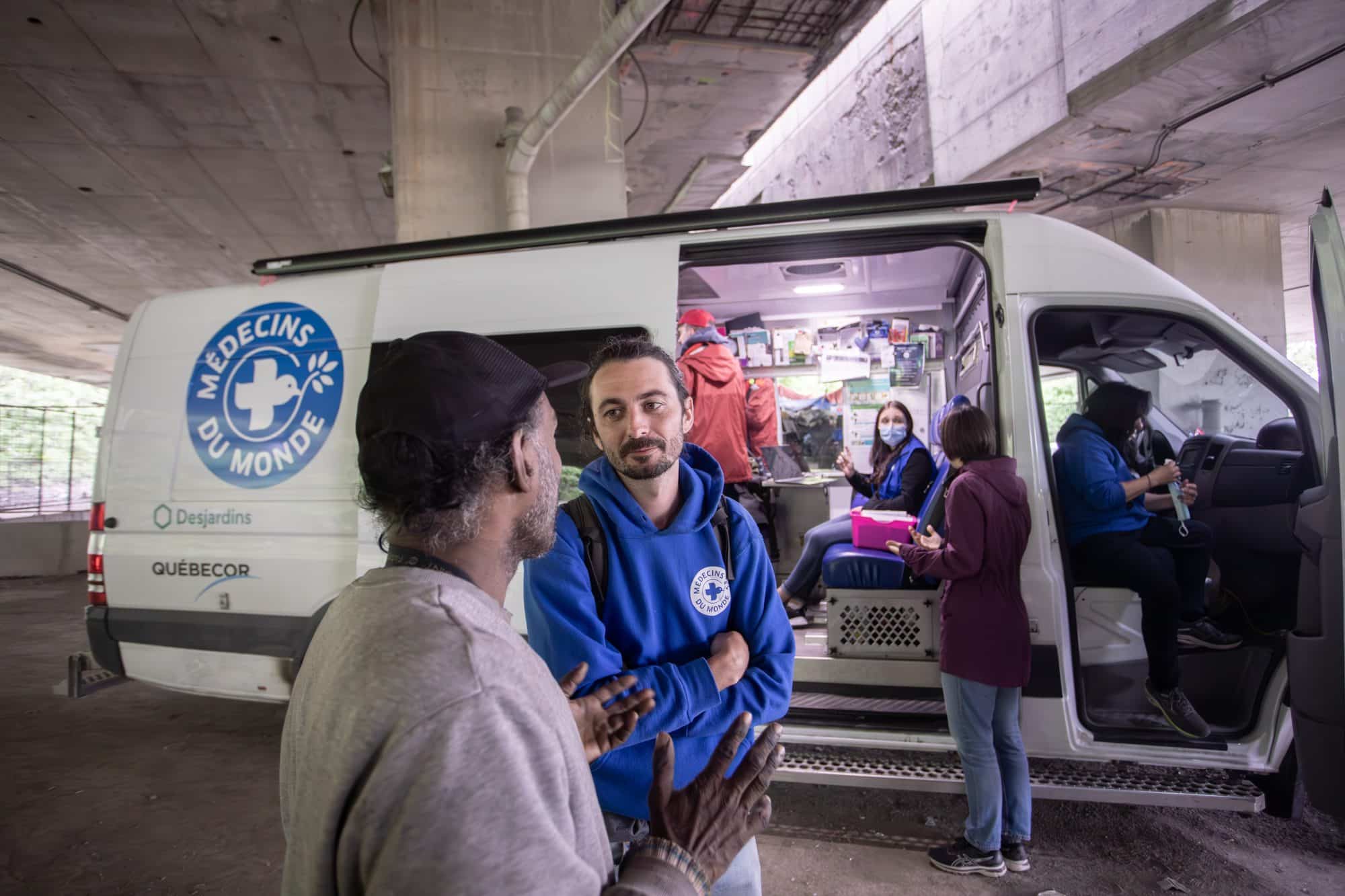
Doctors of the World teams have been working on the streets of the metropolis since 1999; they regularly witness the growing precariousness and the deterioration of living conditions on the street.
From 2018 to 2022, the number of people experiencing visible homelessness increased by 33% in Montreal and by 44% across Quebec.
This homelessness crisis is intertwined with the overdose crisis and the difficulties in accessing decent housing. Additionally, the profiles of those affected are diversifying. Entire families, asylum seekers or migrants, now find themselves without housing.
Both a cause and a symptom of a health and social crisis, this situation stems in particular from government policies that are poorly adapted to the realities on the ground.
A bridge between the community and the healthcare system
Marginalized people face multiple barriers to accessing healthcare. They often avoid hospitals out of fear of being judged, and the way Quebec’s healthcare system provides care is often not adapted to street-based lifestyles.
The Doctors of the World Mobile Clinic team is multidisciplinary and can address health issues in their entirety. Peer support workers in harm reduction, as well as Indigenous navigators, use their experiential knowledge to build connections and reach populations that are often inaccessible to the healthcare system.
“To address these health problems, but above all to provide real and lasting support to these individuals, Doctors of the World places them at the heart of its interventions and adapts to their reality.” Dr. David-Martin Milot, President of Doctors of the World Canada
For a more inclusive and accessible healthcare system
Doctors of the World contributes to the recognition of the rights and needs of marginalized people within the health and social services network, as well as in society at large.
After ten years of providing outreach care across Montreal, the Doctors of the World Mobile Clinic remains a true social vehicle for combating the barriers that block or limit access to healthcare.
“With the Mobile Clinic, we go to the people to offer care that is adapted, humane, and respects their pace.” Pénélope Boudreault, Director of National Operations and Nurse
The Mobile Clinic team consists of:
- 3 nurses
- 59 volunteers trained for the mobile clinic
- 49 volunteer doctors
- 2 peer support workers in harm reduction
- 5 Indigenous navigators
- 22 community partners
Since 2014, the Doctors of the World outreach nurses have completed an average of 1,000 consultations per year.
From the backpack to the Mobile Clinic
Before the Mobile Clinic opened in 2014, Doctors of the World nurses roamed the streets of Montreal with their backpacks, carrying all the necessary medical equipment. This way of working made them agile and accessible, but their movements were limited, and logistical challenges were numerous.
Thus, the Mobile Clinic was born—a place where anyone, regardless of their social status, origin, or living conditions, can receive care in complete safety, anonymously, shielded from prying eyes, behind a closed door and not on a street corner.