
“We’re not trying to be right; what we want is for the proposed approach to meet the person’s needs.”
For the teams: a humble and empathetic stance
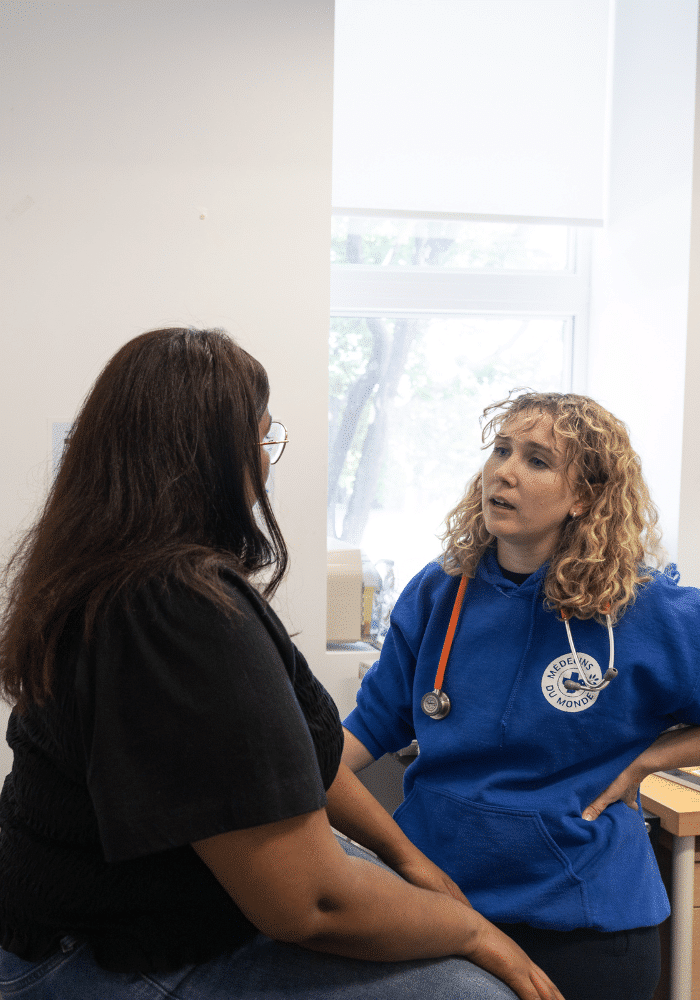
“As a nurse, when I care for someone who has substance use issues, I know there’s a part of their reality I’ll never understand.” explains Andréanne, who works on Médecins du Monde’s mobile clinic. Is that a problem? “It’s okay.” she says gently. Listening to her, it quickly becomes clear why: the goal isn’t to find solutions for the person in their place, but rather to listen to and respect their needs, their pace, and their limits. This is far from the stance of a worker who would have all the answers to others’ problems. “We’re not trying to be right; what we want is for the proposed approach to meet the person’s needs.” And it works: listening to what people have to say, what they want, “is a sign of respect,” adds Andréanne. The result: “the care experience is much more positive.”
“People want to be seen, to exist, and to be valid.”
For the people: respect and empowerment
Respect is a pretty important concept when working with people whom society too often treats with contempt—sex workers, people experiencing homelessness, or migrants with precarious status. “People want to be seen, to exist, and to be valid.” says Farin, a peer in harm reduction, who works alongside Andréanne. Pierre, a psychologist at Médecins du Monde, sums it up: “when no one has ever listened to you and finally someone does, it gives value to what you say, and it works on self-esteem.” An essential ingredient for making the decisions that will help someone get better.
In short, breaking the cycle
Mathieu, an Indigenous navigator, puts it well: the goal is above all to co-construct with service users a “toolbox” that will finally make it possible to “break the cycle” of marginality. And step by step, heal injustice.