Increased enjoyment of rights related to health, particularly sexual and reproductive health (SRH), for women, men, girls and boys affected by conflicts in northern Burkina Faso and for youth in the rest of the country.
people need humanitarian aid
people need healthcare
has already experienced physical violence
at some point in her life since the age of 15
In 2025, the humanitarian situation in Burkina Faso remains concerning, marked by growing needs linked to population displacement. There are approximately 2 million internally displaced persons and 41,765 refugees, mainly from Mali. Insecurity, particularly related to armed conflicts, continues to restrict access to essential services such as health, education, and food.
These armed attacks by radical groups are severely testing the health system. Women, adolescent girls, and girls, at risk of exposure to physical, sexual, and psychological violence, are the most affected, particularly due to difficulties accessing resources and the means of transport needed to travel long distances.
Furthermore, in Burkina Faso, gender inequalities are significant, both in terms of access to and control of resources, as well as within the family, physical integrity, civil liberties, and rights.
Additionally, the health system is heavily impacted. Indeed, approximately 31% of health facilities are affected, with 17.7% completely closed, while others operate at reduced capacity, limiting access to care for millions of people. Health infrastructure and public services also remain exposed to violence, worsening insecurity for populations and health personnel.
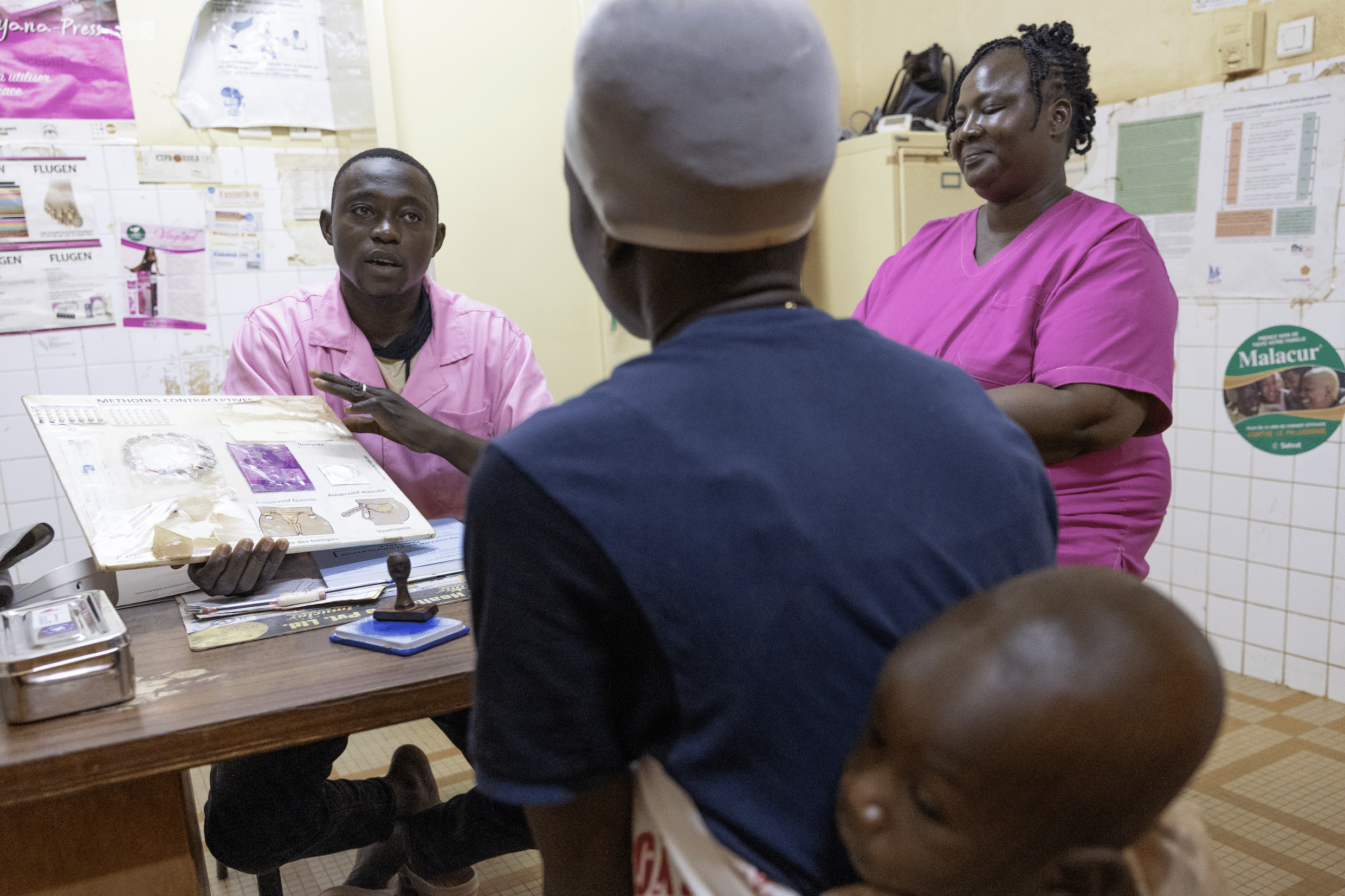
A doctor and a midwife present contraceptive methods to a patient during a consultation at the Gounghin 7 medical centre in Ouagadougou.
"Thanks to the project's training, I have gained confidence, improved my hygiene conditions, and I am now able to raise awareness among other women."
— Adolescent participant in the project's training in Northern Burkina Faso