
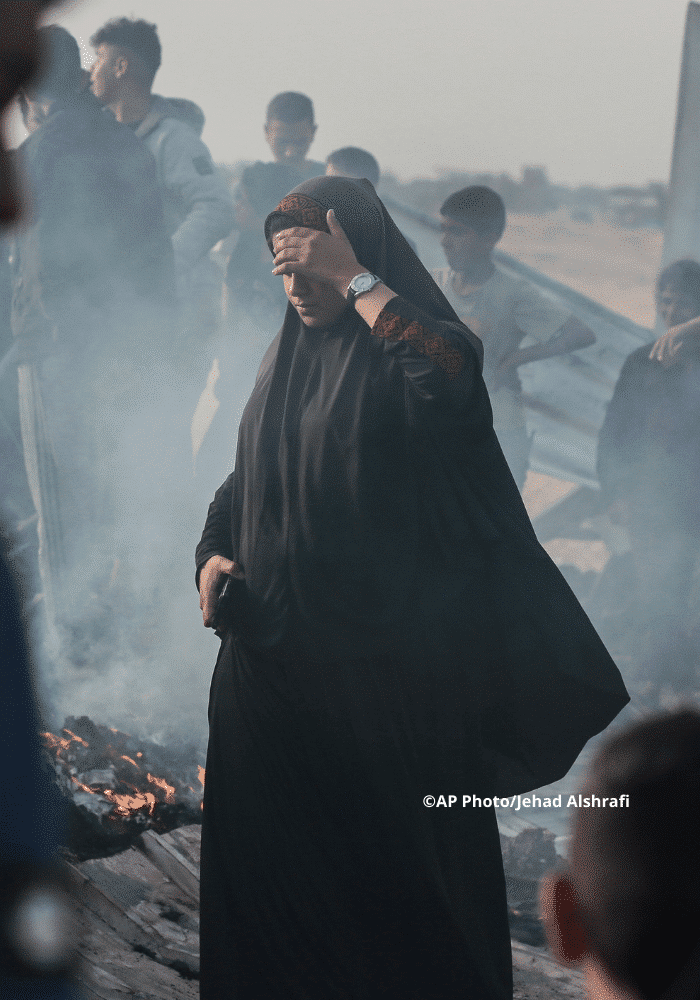
In reality, the humanitarian response is on the verge of collapse. The latest Israeli attacks on a displaced persons camp near UN humanitarian facilities reportedly killed dozens of people, including children, and injured countless others. Meanwhile, the intervention capacity of aid organizations and medical teams has nearly collapsed. Temporary solutions such as a “floating port” and new crossing points have had little impact.
Humanitarian organizations now fear a rise in deaths due to famine, disease, and lack of access to medical assistance. Land and sea entry points remain closed to meaningful humanitarian aid, particularly blocking fuel supplies, while attacks are intensifying in areas sheltering civilians.
“The 20 humanitarian organizations deplore the fact that aid has reached one of the lowest levels observed in the past seven months.”
The deliberate obstruction at Israeli-controlled crossing points, the escalation of hostilities, and prolonged telecommunications outages have reduced the volume of aid delivered to Gaza, whether in food, fuel, or medical supplies. The 20 humanitarian organizations deplore the fact that aid has reached one of the lowest levels observed in the past seven months.
Médecins Sans Frontières (MSF), one of the main humanitarian and medical actors in Gaza, has been unable to deliver supplies to the enclave since May 6. The lack of drinking water exposes patients to a high risk of disease. Several times, desalination kits and submersible pumps were sent to establish sustainable water supply systems, but these equipment are almost systematically blocked by the Israeli authorities.
Difficulties in safely distributing aid in the enclave are greater than ever. In less than three weeks, nearly a million Palestinians have once again been displaced into overcrowded areas unfit for their survival. The need for protection of humanitarian operations, including the safety of humanitarian workers and the proliferation of Israeli checkpoints within the Gaza Strip, continues to hinder the humanitarian response and raise serious concerns.
1 million Palestinians are displaced in overcrowded areas.
Zenab, a pregnant woman whose husband was killed in an Israeli airstrike, told CARE International in March that she had fled Gaza City for Rafah, then Khan Younis. She had to walk for hours to visit different pharmacies, hospitals, and health centers to find medication to manage her pregnancy complications but could not find enough drinking water or food. Her doctor said she needed a cesarean section and was due to give birth next week, but he fears there will be no space in the hospitals that are still partially operational.
In Gaza, the health system is shattered. Every hospital has either received evacuation orders, is besieged by Israel, or is on the brink of running out of fuel and medical supplies. The largest hospital in Rafah, Abu Yousef al-Najjar, had to close following an evacuation order issued by Israel, while all hospitals in northern Gaza are inaccessible. Medical staff report daily patient deaths due to a lack of medical supplies. Doctors, nurses, and other healthcare workers continue to be killed or forcibly displaced.
Save the Children laments that children requiring medical care cannot be evacuated from Gaza. Facing severe psychological distress, they are in dire need of psychosocial support to survive the horrors they face daily, such as the loss of their family and loved ones.
Juzoor, an Oxfam partner organization, reported on May 19 that six of the already overcrowded shelters it supported in Jabaliya, in the northern Gaza Strip, were completely destroyed by Israeli bombings. These shelters provided medical services and housed displaced persons from areas in the northern Gaza Strip. Staff members who fled the area found burned patient beds and destroyed essential medical equipment and supplies upon their return.
“Announcements of crossing points and new initiatives have only created the illusion of improvement.”
In the southern Gaza Strip, the delivery of humanitarian aid has been completely disrupted. In Rafah, all bakeries have been forced to close. Some organizations have been compelled to suspend distributions in the southern Gaza Strip due to depleted resources, inability to access warehouses where they are stored, and ongoing insecurity. They may soon be forced to suspend them in Khan Younis, Deir al-Balah, and Gaza City as supplies rapidly dwindle.
Many Palestinians are now surviving on barely 3% of their daily water needs, while temperatures rise and diseases such as diarrhea and hepatitis spread rapidly.
Announcements of additional crossing points and new initiatives, such as the new “floating port,” have only created the illusion of improvement. Yet, these remain superficial measures. Between May 7 and May 27, 2024, only 1,000 trucks were able to enter the Gaza Strip, across all crossing points, including via the recently constructed “floating port,” according to the UN. This figure is alarming given the growing humanitarian needs of Gaza’s 2.2 million inhabitants, marking the first time it has been this low in the past seven months.
The Rafah crossing, one of the main entry points for humanitarian workers and aid into the Gaza Strip, has been closed since May 7, when Israeli forces took control of it. Meanwhile, over 2,000 humanitarian aid trucks remain stranded in Arish, Egypt, awaiting Israeli authorization to enter. Food is rotting, and medicines are expiring while families face an unprecedented level of famine just a few kilometers away. Although the Kerem Shalom crossing remains officially open, commercial trucks have been prioritized over humanitarian aid trucks, and aid delivery remains unpredictable and irregular.
Humanitarian and human rights organizations continue to call for an immediate and lasting ceasefire to save and protect lives in Gaza. They also demand the establishment of regular and reliable routes to safely deliver aid to the Gaza Strip. The organizations urge the warring parties to respect international humanitarian law (IHL) and call on Israel to comply with the decisions of the International Court of Justice, including its most recent order demanding an end to the military offensive in Rafah. The international community, including third-party states and members of the UN Security Council, remains bound by their obligations under IHL and the ICJ’s decisions to ensure the protection of Palestinians.
Humanitarian aid organizations are working around the clock to provide life-saving assistance despite the dire circumstances, but nothing more can be done if states continue to evade their legal obligations and moral responsibility to ensure a ceasefire.
EDITORIAL NOTES
- Humanitarian aid organizations have repeatedly warned that any attempt to deliver aid to the Gaza Strip via air and sea routes (which remain ineffective, costly, and even dangerous) cannot replace the volume of aid transported through land crossings and risks obscuring the obstacles faced by humanitarian organizations on the ground. Before October 7, the average number of trucks entering the Gaza Strip was 500 per day, including fuel.
- Between May 7 and May 23, 906 aid trucks entered the Gaza Strip through all combined land and sea crossing points, and 160 additional aid trucks entered between May 24 and May 26, for a total of 1,066.
- Over 81,026 Palestinians remain seriously injured, and all medical evacuations from Gaza have ceased since Israel took control of the Rafah crossing on May 7. An estimated 14,000 critically ill or injured patients require care abroad to receive life-saving treatment.
- 4,500 trucks, both commercial and humanitarian, remain stranded at the Egyptian border at the Rafah crossing.
- At the Kerem Shalom crossing, Israeli authorities are now prioritizing commercial trucks over those carrying humanitarian aid, meaning that food and supplies delivered will not be distributed to those most in need.
- Access via Erez-West (Zikim) remains severely hindered.
- Over 266 humanitarian workers, mostly Palestinian, have been killed.
- Since May 7, humanitarian organizations in the Logistics Cluster have been unable to access storage warehouses, facilitate storage services, or operate the cargo notification system to support humanitarian actors.
- As of May 7, over 450,000 people are in the Al-Mawasi area, according to UNRWA and the Office for the Coordination of Humanitarian Affairs (OCHA).
SIGNATORIES
ActionAid
Action Corps
Alianza por la Solidaridad
American Friends Service Committee
Anera
Avaaz
CARE International
Churches for Middle East Peace
DanChurchAid
Danish Refugee Council
Democratic Socialists of America
Humanity & Inclusion – Handicap International (HI)
Johanniter International Assistance
Médecins du Monde
Medical Aid for Palestinians
Mennonite Central Committee
Middle East Children’s Alliance
Norwegian Church Aid
Norwegian People’s Aid
Norwegian Refugee Council
Oxfam
Plan International
Première Urgence Internationale
War Child Alliance