
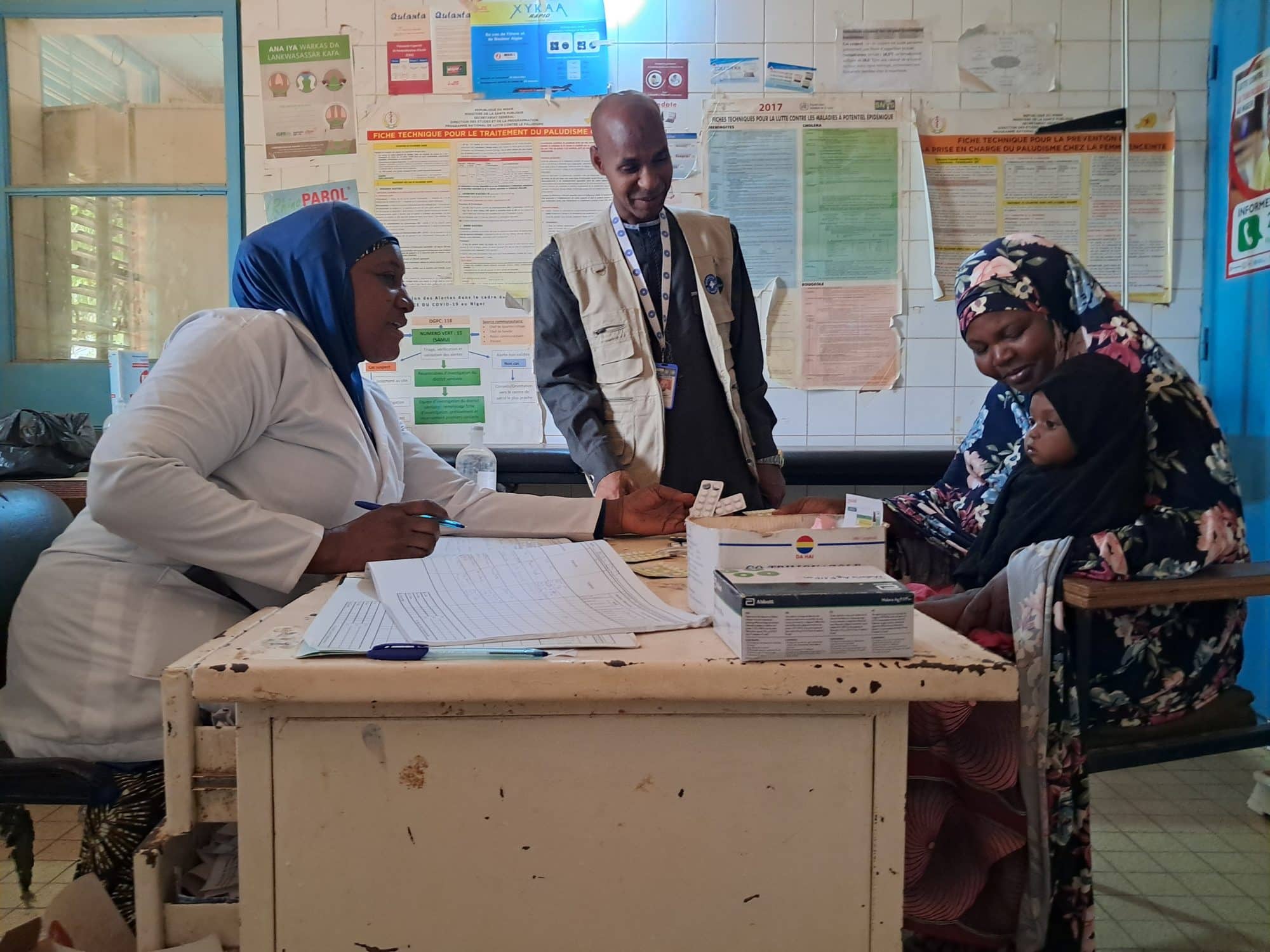
Effective international development relies on strong and equitable partnerships with local communities. During International Development Week (IDW), we highlight our collaborative approach that respects field realities.
What is an equitable development partnership?
An equitable partnership is based on reciprocal and balanced relationships, in which each party contributes and benefits fairly. We value the autonomy and sovereignty of our local partners, moving beyond the traditional aid dynamic to prioritize a truly collaborative approach.
The key word? SUPPORT. It involves recognizing existing skills, co-constructing context-adapted solutions, and building sustainable development projects together.
“All our projects meet the community’s needs,” explains Rémy, coordinator of the DEVENIR project in Niger.
In practice, even when funding is provided for specific initiatives, projects are adapted to the priorities expressed by the communities.
Partnerships aim to go beyond short-term goals and target social change and sustainable development. Focusing on the long term fosters the maturation of relationships and the consolidation of shared achievements. We are aware of the diversity of contexts and challenges specific to each partnership, which is why we advocate for a flexible approach that adjusts to the specific needs of partners.
Learn more about our projects in Niger
The example of Niger: between action and listening
In Niger, in partnership with Socodevi, Doctors of the World works simultaneously in two complementary areas: community health and the economic empowerment of women.
Without economic capacity, access to care remains difficult. Conversely, without a healthy population, economic development cannot materialize. This systemic understanding enables local partnerships to create a deep and lasting impact.
“I can only be proud when I see the community I work for thriving,” says Rémy.
This shared pride illustrates the power of partnerships: when projects truly belong to the populations, the results durably transform their living conditions.
Our experience on the ground shows that several elements are essential: humility and active listening, flexibility to adapt projects, mutual exchange to strengthen our shared capacities, and a systemic vision recognizing the interconnection between health, economy, and development.
A necessary reminder in the face of cuts
During this International Development Week, it is crucial to remember that partnerships are essential for community development and population health.
Yet, we are witnessing a widespread reduction in international aid funding, both in the United States and Europe, affecting multilateral organizations as well as many civil society organizations.
Canada is not exempt from this trend. At the federal level, the budget announced by the Prime Minister last November includes cuts to international aid over several years (link to the news).
In Quebec, the major and abrupt cuts to the Québec Sans Frontières program force us to reduce our activities, including our mental health program in Haiti, which is nevertheless an excellent example of partnership with a local mental health organization.
These decisions jeopardize years of investment in local capacity-building and compromise the future of entire communities. International aid is not optional.