
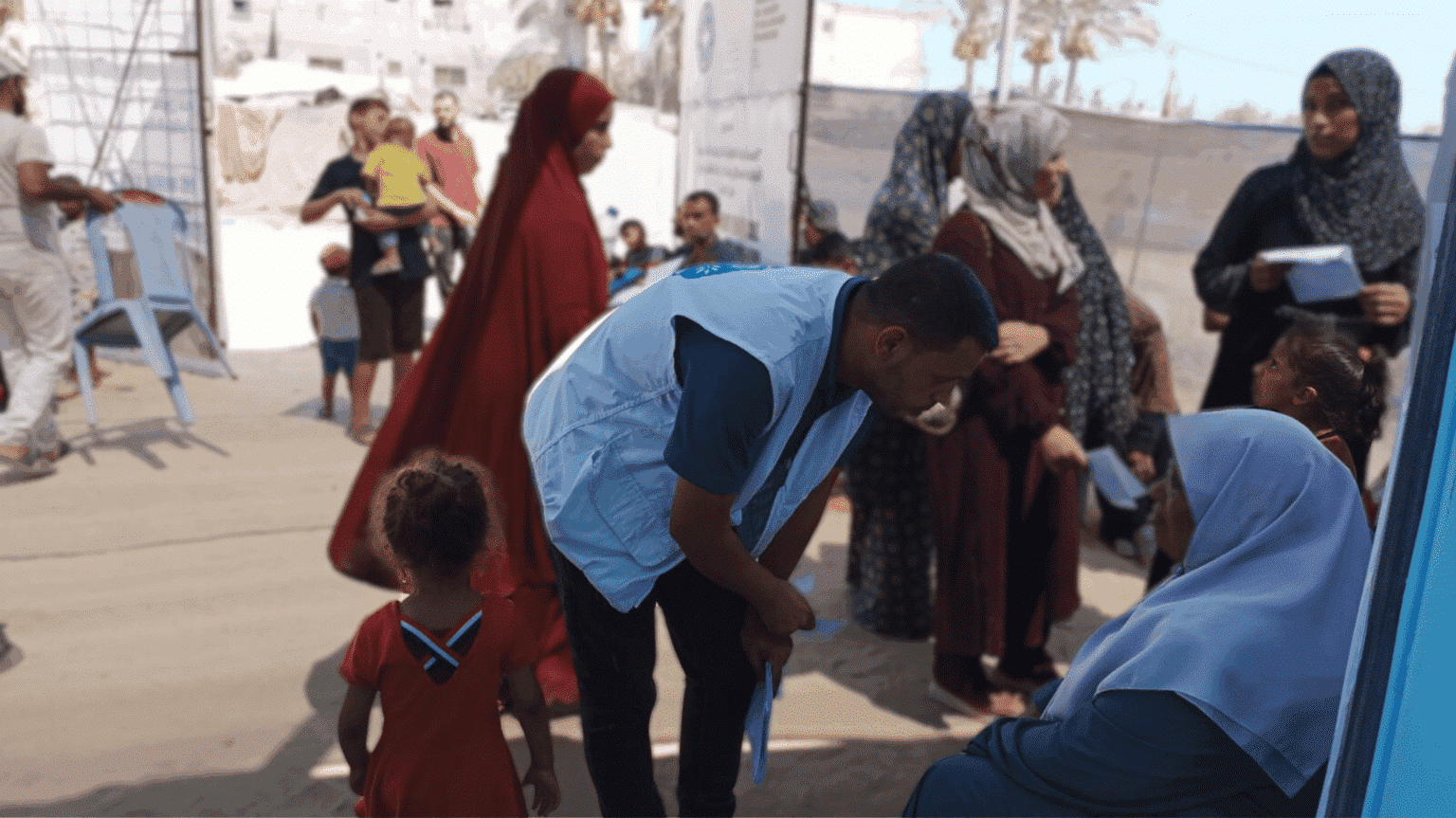
In August, 16 Israeli forced displacement orders pushed civilians and humanitarian workers into an increasingly reduced area. It is now smaller than 36.5 km², which is smaller than the borough of Saint-Laurent in Montreal. Over 250,000 people were displaced during the month. Médecins du Monde’s operations, as well as those of at least 23 international NGOs, were severely impacted.
Obstacles to humanitarian aid, read the report
“The Israeli army is further suffocating the Gazan population every day by imposing restrictions on humanitarian aid that contravene international humanitarian law.” Mahmoud Isleem, Head of Médecins du Monde’s operations in Palestine.
With the resurgence of epidemics such as polio, these restrictions are all the more inhumane as they prevent populations from accessing urgent medical care and essential goods like food or drinking water.
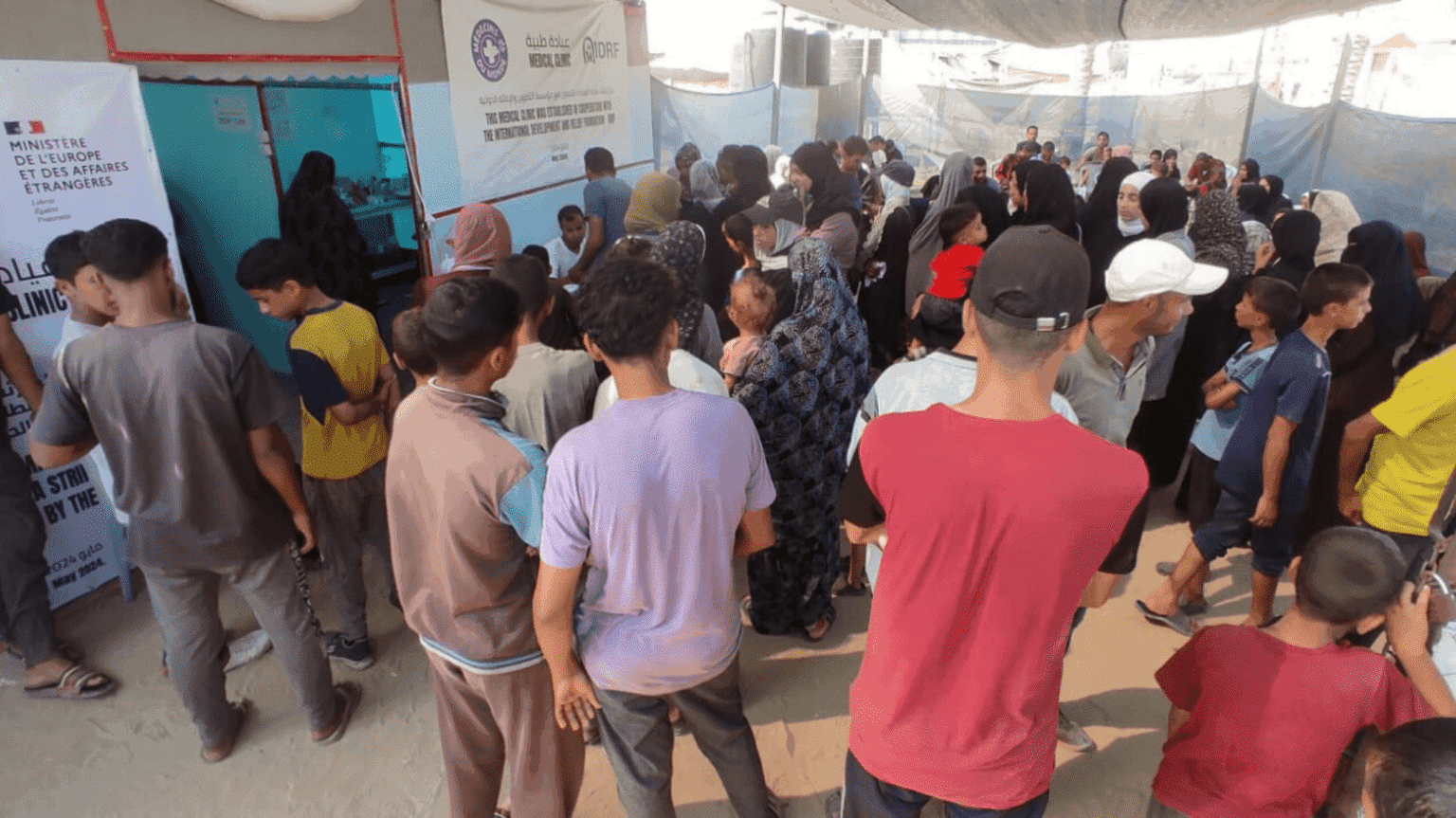
The increased restrictions imposed on international NGOs include the following:
- Lack of concrete measures to protect humanitarian workers in the Gaza Strip: Israel has implemented two mechanisms that in reality provide no security for humanitarian workers. The first, the so-called “humanitarian zone,” has no legal basis and offers no security due to repeated attacks within this area. The second, the humanitarian notification system allowing organizations to inform Israeli forces of their positions and movements, also provides no real protection given repeated Israeli strikes on notified sites, including international NGO premises. NGOs are taking unprecedented risks to deliver aid.
- Increase in forced displacement orders within the area unilaterally designated by Israel as a “humanitarian zone”: The latest forced displacement orders have affected numerous sectors within this zone, reducing its size by 12.6% to less than 10% of the Gaza Strip. NGOs fear this zone may be further reduced and could soon be divided into two separate areas, isolating civilians and further cutting off aid to those in desperate need. Moreover, this zone does not guarantee the population’s safety from military operations.
- Forced restriction of humanitarian operations: When issuing forced displacement orders, Israeli forces clearly indicate that large-scale ground military operations will follow in these areas. NGOs therefore have no choice but to continuously relocate and reduce their operational area, preventing them from intervening based on fundamental humanitarian principles.
- Severe restrictions on the delivery of essential goods allowed to enter the Gaza Strip: Israel has banned the delivery of numerous goods to Gaza due to their potential dual use in military operations. However, with essential items such as diapers and antibiotics included on this list, the true intent of these restrictions is questionable. Médecins du Monde notes with concern the increasingly drastic restrictions on the amount of cash allowed into Gaza and on medical supplies, further hindering our emergency humanitarian response.
The undersigned international NGOs urge the international community to take action to ensure an immediate and lasting ceasefire to protect civilians and ensure that vital aid can reach all those in need without compromising the safety of humanitarian personnel.
Photo: MdM France