
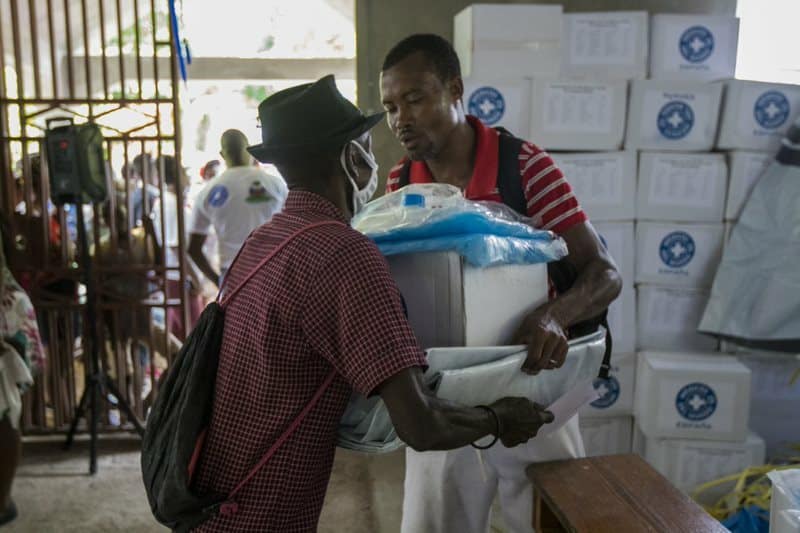
Haiti is facing a tense situation marked by violence and protests which, in addition to putting the population at risk, are paralyzing the country and humanitarian aid. In Port-au-Prince, the blockade of the Varreux oil terminal by gangs has led to a fuel shortage. This energy crisis is disrupting the operation of health infrastructure, access to drinking water, and creating fertile ground for the resurgence of cholera. The needs of the Haitian population are worsening, and the living conditions of the most vulnerable people are deteriorating.
Médecins du Monde reminds that access to health and humanitarian aid is not guaranteed under these conditions.
- 1.5 million people are directly impacted by gang violence, including gender-based violence
- 4.9 million people are in need of humanitarian assistance, including some 1.3 million women of childbearing age
- Haitian authorities announced on Sunday, October 2, 2022, the death of 7 people affected by cholera. The epidemic had caused the death of over 10,000 people between 2010 and 2019.
Compromised access to essential services
Insecurity is preventing access to health infrastructure for both medical staff and patients. Indeed, the transport and supply of equipment and medicines due to the fuel shortage and the difficulty for medical staff to reach their workplace because of barricades are having serious consequences for three-quarters of the country’s hospitals. For example, it is difficult to preserve vaccines and ensure sterile conditions for surgical procedures. Access to the few health centers and hospitals that are still functioning has become dangerous, if not impossible. Yet, Haiti already had the highest maternal mortality rate in Latin America and the Caribbean, and the needs are only increasing.
Resurgence of cholera
The unrest in the country has led to a resurgence of cholera cases, particularly severe in areas under gang control, a consequence of lack of access to drinking water and services. The response to this situation is all the more complex as patients suffering from diarrheal diseases cannot reach hospitals, and ambulances struggle to circulate due to roadblocks. The World Health Organization estimates that the situation will worsen. The current socioeconomic climate will further complicate the response to the cholera resurgence.
Obstruction of humanitarian access across the country
Main roads being under gang control, humanitarian access is compromised. The work of humanitarian workers in the field is becoming increasingly dangerous. Humanitarian organizations are urgently seeking to reach the most vulnerable populations to provide humanitarian aid. Most humanitarian partners have been forced to cease all field activities and reorganize their work to ensure minimal assistance.
Warehouses of the World Food Programme and other UN agencies and humanitarian organizations have been looted, compromising the humanitarian response for the end of 2022.
Humanitarian funding is insufficient: the humanitarian response plan for Haiti is only funded to the tune of 103.4 million US dollars, representing a third of the needs for 2022. It is urgent to increase funding for the humanitarian response.
Médecins du Monde prepares to respond to the cholera outbreak in Haiti
Médecins du Monde has been witnessing for months the dramatic deterioration of the medical and health situation across the country and the daily violence against the population. Despite current conditions, the organization continues to provide institutional and community support while attempting to respond to the most urgent needs within the limits allowed by the security situation.
Médecins du Monde calls on all parties to respect healthcare facilities and staff, whose work is crucial in the face of the deteriorating health situation.
Médecins du Monde is particularly concerned about the resurgence of cholera cases, three years after the end of cholera in Haiti. It was indeed after a long battle of nearly 9 years that the health actors mobilized in Haiti, including Médecins du Monde, had succeeded in putting an end to the active transmission of the disease.
Safe access to healthcare providers and funding for services are urgently needed to prevent high levels of unwanted pregnancies, maternal deaths, and to protect women and girls from sexual violence.
FOR MEDIA REQUESTS, PLEASE CONTACT MÉLISSA CABANA, DIRECTOR OF COMMUNICATIONS AND MOBILIZATION
Cell: 514-799-8985
melissa.cabana@medecinsdumonde.ca