
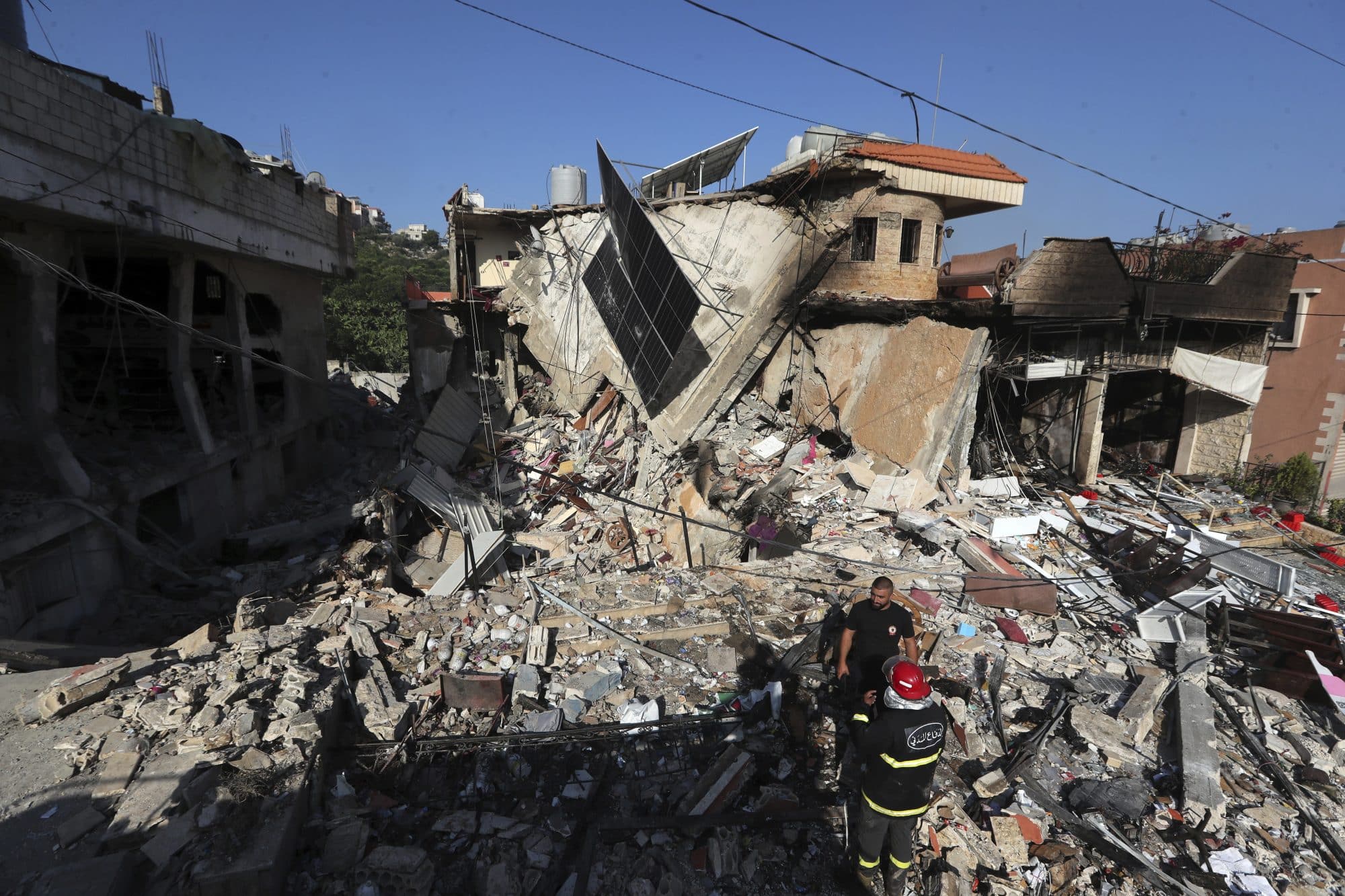
“We are grateful to hear that Canada continues to highlight the growing humanitarian needs in Lebanon. Our members are responding to this crisis by providing vital support across the country,” said Richard Morgan, Executive Director of the Humanitarian Coalition. “With November being Lebanese Heritage Month, we know that more and more Canadians are looking for ways to support this response.”
The Humanitarian Coalition emphasized that it was united in its call for a ceasefire, as well as in its hope that all parties to the conflict adhere to international humanitarian law, protect civilian lives, and allow humanitarian aid to reach those in need as quickly as possible. The Humanitarian Coalition also noted that there are currently no unmet humanitarian needs in Israel requiring its response, but that it will continue to monitor the situation.
The humanitarian situation in Lebanon:
- To date, 2,867 people have been killed and 13,047 injured since October 8, 2023. This figure includes 178 children killed and 1,173 injured among all reported cases (Ministry of Public Health).
- Between September 17 and October 31, 2024, 36 attacks were carried out against healthcare facilities, during which 85 healthcare workers were killed and 51 injured in the line of duty (WHO).
- UNFPA reports that the escalation of the conflict in Lebanon has affected over 11,000 pregnant women, including 1,300 who are expected to give birth soon despite massive infrastructure losses and a healthcare system on the brink of collapse.
- There are 1,133 approved shelters, with 957 of them at full capacity. Schools, gymnasiums, and cultural centers have been urgently converted into accommodation sites.
- Many displaced persons are currently sleeping in the streets and parks, and their conditions are becoming increasingly precarious. The increasingly cold weather is expected to further complicate shelter conditions.
- Before the current escalation, poverty in Lebanon had more than tripled over the past decade, reaching 44% of the total population.
- Lebanon (population 5.4 million) hosts more refugees per capita (1.5 million) than any other country in the world. Nine out of ten refugees in Lebanon live in extreme poverty.
- Since October 4, 2024, at least one child has been killed and 10 injured every day in Lebanon.
- To date, over 1.2 million people have been forced to flee due to this conflict. Among them, 840,000 are internally displaced, and 469,000 have gone to Syria.
- Most displaced persons require emergency assistance, as they had to flee their homes quickly without basic necessities for daily living.
- The entire population is suffering from psychological distress and protection issues due to the constant daily overflights of drones and jet aircraft.
Response from Humanitarian Coalition members:
Our members have been present in Lebanon for decades and intervened there in 2020 following the explosions in Beirut. Today, they are deploying the following preliminary interventions:
- Emergency food aid: They are addressing food shortages by providing food kits containing meat, dates, bread, etc. They are also facilitating access to drinking water through the distribution of water bottles and water tankers.
- Shelter and warmth: They are distributing pillows, blankets, and other essential items.
- Emergency kits: They are providing hygiene kits, dignity kits, and menstrual hygiene kits.
- Medical support: They are assisting health clinics and mobile units in offering emergency services, maternity and newborn care, vaccines, mobility aids, emergency rehabilitation, and psychological first aid and support.
- Protection: They are offering services to prevent gender-based violence and sexual exploitation. They are also setting up child protection areas and promoting family reunification.
- Emergency financial aid: They are distributing aid that allows families to respond quickly and appropriately to their needs while supporting local markets.
The Humanitarian Coalition brings together 12 leading humanitarian organizations to provide Canadians with a simple and effective way to support international humanitarian emergencies. Its members are: Action Against Hunger, Canadian Foodgrains Bank, Canadian Lutheran World Relief, CARE Canada, Doctors of the World, Humanity & Inclusion Canada, Islamic Relief Canada, Oxfam Canada, Oxfam-Québec, Plan International Canada, Save the Children Canada, and World Vision Canada.
MEDIA CONTACT:
Mélissa Cabana, Director of Communications
Doctors of the World Canada
melissa.cabana@medecinsdumonde.ca
514-799-8985
Photo: AP Photo/Mohammed Zaatari