
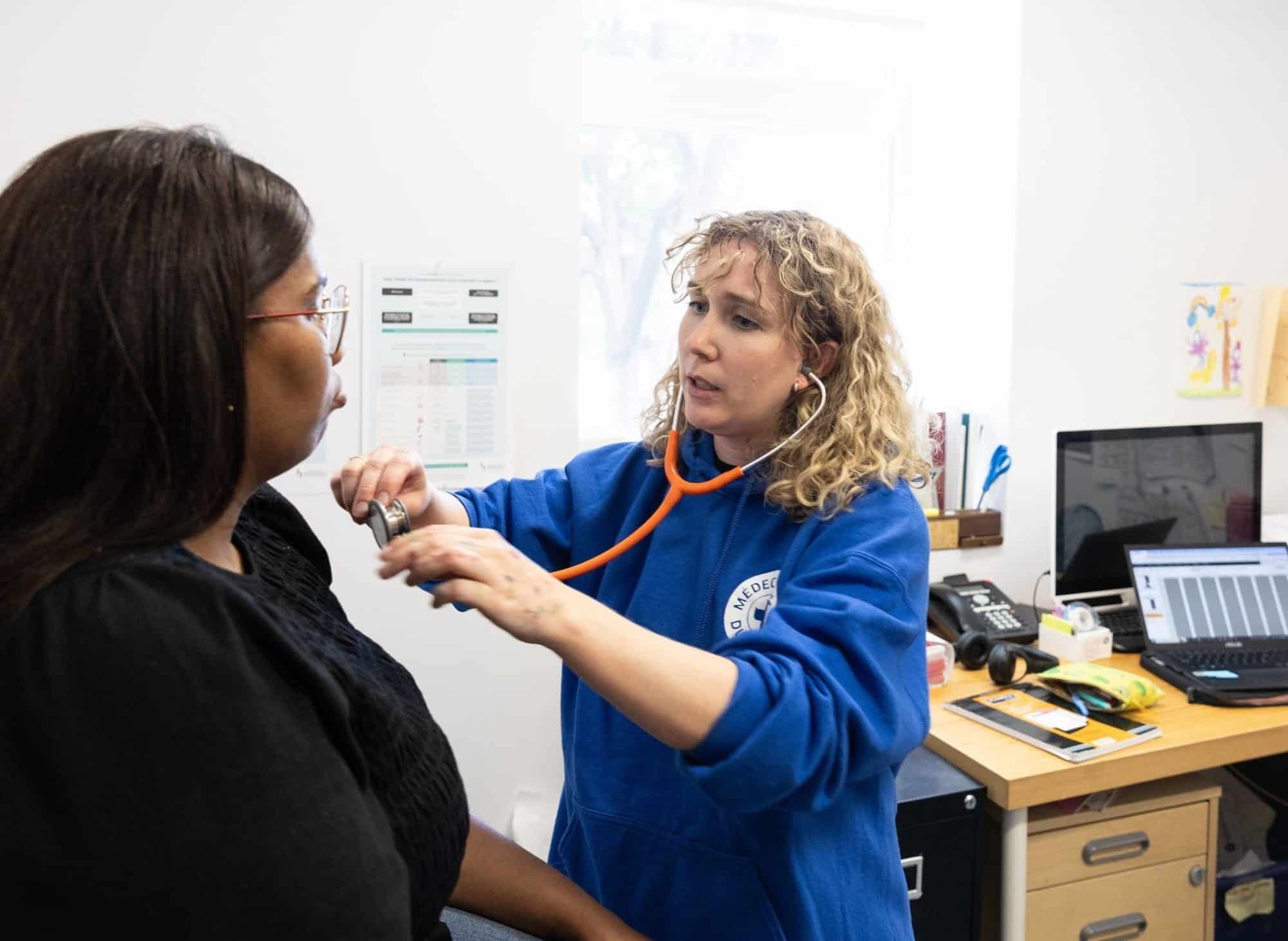
Doctors of the World reaffirms that the right to health is based on four inseparable internationally recognized components: quality, accessibility, acceptability and availability of care. Bill 2, as currently designed, raises concerns about jeopardizing these fundamental principles.
A quantitative logic that compromises the quality of care for all
By imposing performance targets focused on speed and volume, the bill risks reducing the time devoted to each patient. This efficiency-driven approach undermines listening, the trust relationship and adaptation to complex needs, which are essential to humane and quality care.
Furthermore, this approach leaves no room for disease prevention and health promotion, which are key to better individual and collective health. The system will not be relieved by multiplying appointments or “opening more slots,” but rather by reducing the number of people who need to use it through prevention, health promotion and interventions on the social determinants of health.
Distorted accessibility and increased risks of exclusion
Although the bill claims to improve access to care, the logic it imposes may have the opposite effect for the most vulnerable people or those with complex needs.
Indicators focused on deadlines and volumes risk excluding people perceived as “too time-consuming” or “too complicated” to monitor, whether they are people experiencing homelessness, migrants with precarious status, substance users, people without a RAMQ card, or those living with comorbidities, multiple issues or deemed non-compliant with treatments and follow-ups.
These populations, already weakened by social, administrative and medical barriers, risk being sidelined in a system that values speed over continuity, the complementarity of expertise and adaptation.
Truly improving access is not about increasing the number of consultations with a doctor. It means strengthening multidisciplinary teams, promoting the full scope of practice of each professional and low-threshold approaches, which bring together doctors, nurses, psychologists, physiotherapists, peer support workers, social workers, community workers and several other professionals. These teams make it possible to respond more adequately to complex needs, avoid breaks in follow-up and reduce pressure on the system by decreasing unnecessary recourse to medical consultations.
Finally, the collection and sharing of information with the RAMQ to define “vulnerability” raise major issues of confidentiality and consent. For people already facing stigmatization or fearing administrative consequences, this practice risks reinforcing mistrust and hindering access to care.
Availability and acceptability at risk
By increasing performance pressure, Bill 2 risks leading to disengagement among caregivers and worsening existing service shortages. These breaks in follow-up will primarily affect the most vulnerable people, those who require continuous and adapted support.
By reducing clinical autonomy, the bill limits caregivers’ ability to adapt their practices to life trajectories and social barriers. When professionals no longer have the freedom to adjust their interventions to the reality of patients, the quality of care suffers.
Freedom of expression and association: a worrying setback
Doctors of the World is also concerned about the restrictions provided for in Bill 2 regarding freedom of expression and association. Limiting the ability of community, professional and citizen organizations to speak out or mobilize is not only a democratic issue, but also risks further weakening our collective capacity to defend and promote equitable access to care.
Doctors of the World calls for a reform that guarantees real and equitable access to care, built with health professionals, field actors and care recipients, rather than unilaterally imposed by a law. Such a reform must be based on a vision of global health and social justice, where care is designed based on the real needs of people rather than through administrative targets.
To this end, we recommend:
- Redefining access: going beyond numbers to include continuity, prevention, safety and adaptation to social and medical realities, based on the expertise of front-line teams.
- Supporting a system inclusive of multiple realities: recognizing that multidisciplinary teams and low-threshold approaches, mobile clinics, peers, community teams, are concrete solutions to meet complex needs and relieve the system, rather than relying on a single model based on standardized medical appointments.
- Strengthening clinical autonomy: allowing caregivers to adapt their practices to life trajectories and social barriers, rather than imposing uniform productivity-focused objectives.