
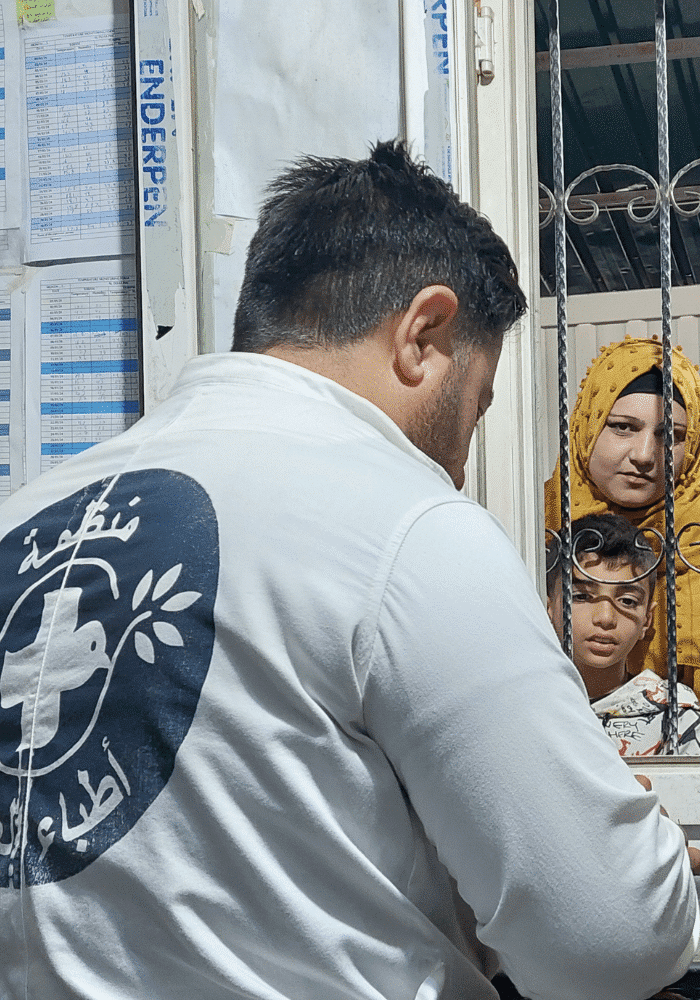
Over the past fourteen years, civilians have been the primary victims of the conflict in Syria, with hundreds of thousands of victims and millions of internally displaced persons or refugees abroad. During the war, essential infrastructure, such as hospitals, power plants, and main access routes, was attacked, severely hindering humanitarian activities. The need for aid has now reached record levels.
As the political situation and security conditions rapidly evolve, Médecins du Monde is adapting its activities to respond more specifically to the massive population displacements within Syria and near its borders. Since November 27, 2024, between 800,000 and one million people have been displaced across the country, including 345,375 in the Idlib governorate alone. As a medical actor, Médecins du Monde has witnessed the collapse of the Syrian health system since the start of the conflict in 2011. Our teams will now be able to access new areas to provide support and reinforcement to local health structures.
Médecins du Monde is also present in northeastern Syria, where recent events have exacerbated security issues for both the population and teams. Health services are overwhelmed, with most structures relying on NGOs. The arrival of over 20,000 refugees from Lebanon and 100,000 internally displaced persons from northwestern Syria has put pressure on an already fragile health system. Security challenges and a severe funding shortfall limit the expansion of aid, making the need for additional resources even more urgent to scale up the crisis response.
Our Rapid Humanitarian Response in Syria
We are launching an emergency response from northwestern Syria toward Damascus, with the rapid deployment of teams and distributions of medical supplies in regions particularly affected by the hostilities that occurred between November 27 and December 8, 2024.
Our priority is to provide essential medical care in Aleppo, then in Hama, Homs, and Damascus. We must work in close coordination with local health authorities and international partners to ensure the effective distribution of medical supplies, including medications and health products.
“Our teams are also assessing the broader medical needs of the population to ensure a response adapted to the changing situation. We are committed to providing vital services and will adjust our operations based on ongoing assessments and security developments.” Hakan Bilgin, President of Médecins du Monde Turkey.
Médecins du Monde Calls on All Parties to Respect Human Rights and Facilitate Humanitarian Aid
We urge all parties to respect the human rights of the Syrian population and facilitate humanitarian aid for the 16.7 million people in need. While the situation in Syria is closely tied to regional issues, we call on all regional powers to end hostilities and protect communities exhausted by years of intense conflict. Civilian infrastructure, particularly medical facilities, must never be targeted but instead protected. They are essential for the protection of civilians and the delivery of humanitarian aid.
As humanitarian conditions remain insufficient to ensure the safe return of Syrians abroad, we urge states to respect the principle of non-refoulement, maintain asylum procedures for Syrian nationals, and refrain from deporting them to Syria, in order to uphold individuals’ right to decide their future.
We Call on Donors to Prioritize Support for:
- Vital services and primary health care across Syria
- Actions to strengthen medical supply chains to address shortages of essential medications and surgical kits, which compromise access to care for thousands of people
- Access to mental health and psychosocial support for adults and children, as current services cover only a fraction of the needs.
Note to Editors:
Médecins du Monde began its activities in Syria in 2008, providing primary health care services in the Aleppo governorate in partnership with the Syrian Arab Red Crescent (SARC), before the start of the conflict. Over the past fourteen years, MdM has implemented numerous medical and humanitarian activities to assist the Syrian population affected by the war. The services offered include emergency medical care, sexual and reproductive health services, consultations for communicable and non-communicable diseases, and mental health and psychosocial support, particularly for the most vulnerable, such as women and children.
PRESS CONTACT
Mélissa Cabana, Director of Communications
Médecins du Monde Canada
melissa.cabana@medecinsdumonde.ca
514-799-8985