
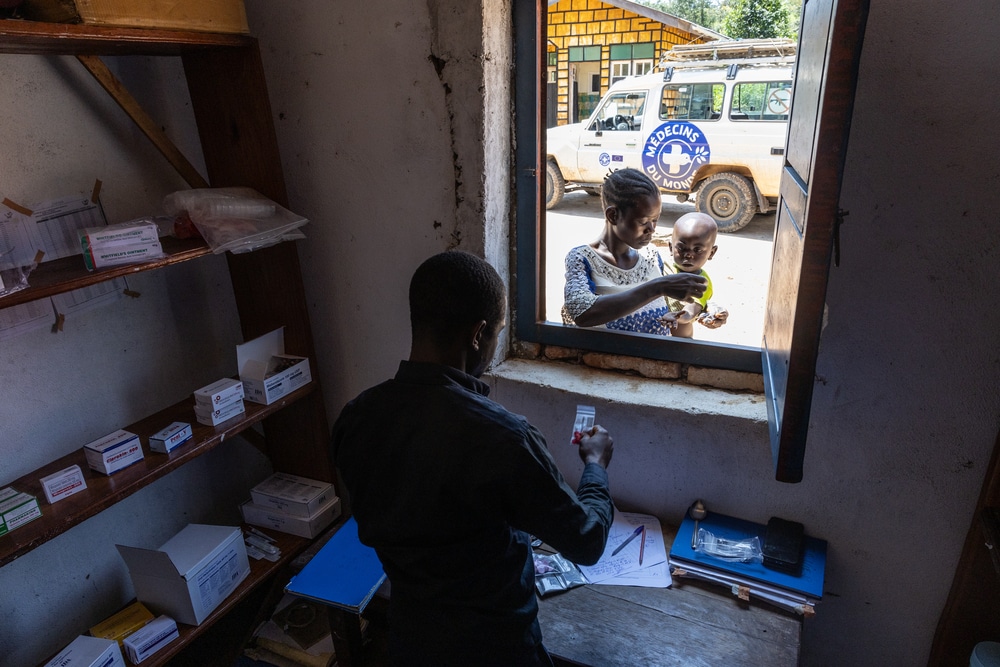
Several countries bordering the Democratic Republic of Congo (DRC) are already affected, and others could be, including outside the African continent. Faced with this alarming situation, Médecins du Monde, one of the most active medical NGOs in South Kivu, initiated a first response in April 2024 to curb the epidemic, drawing on its experience from the Ebola and COVID crises.
Médecins du Monde’s rapid response combines curative and preventive measures
Local health authorities have indeed identified significant needs for the prevention and control of the MPox epidemic, particularly in waste management, access to water, and case reporting by communities.
Training and capacity building
Between April and mid-July 2024, 65 community outreach workers and 13 health committee chairs were trained. Additionally, 350 sex workers were sensitized, as unprotected sexual relations are known to carry a high risk of contamination.
This intervention by Médecins du Monde has enabled 70,000 people (including 36,358 women) to be sensitized to reducing the risks of disease transmission. This has also strengthened surveillance and the medical response to the epidemic.
“In the coming weeks, we are targeting 7 key health zones where 86% of reported cases are concentrated.” Malik Ayari – Crisis and Conflict Referent and DRC Desk
In the coming weeks, Médecins du Monde’s priority intervention will target people infected with the virus, whether suspected or confirmed cases, as well as health and community personnel and community leaders. But also other particularly at-risk groups such as sex workers, traders, minors, or those frequenting bars.
“Our response is strategic. We aim to train health personnel, improve infection prevention and surveillance, support psychosocial assistance, and strengthen awareness and surveillance within communities.”
A solid experience
Initially detected in monkeys, from which it gets its name, human-to-human transmission occurs through close contact, such as touching, kissing, or sexual relations.
Like the Ebola epidemic or the COVID-19 pandemic, which Médecins du Monde faced between 2019 and 2020, MPox is a zoonosis, meaning a disease transmitted from animals to humans. Together with our partners, including Vétérinaires Sans Frontières, Médecins du Monde is a pioneer in the One Health approach, which integrates the health of people, animals, and ecosystems.
Médecins du Monde has been active in the DRC for over 20 years. Our teams work in Sexual and Reproductive Health and Rights – SRHR, and are also pioneers in the One Health approach mentioned above.
Photo: Médecins du Monde Canada / Alexis Aubin