
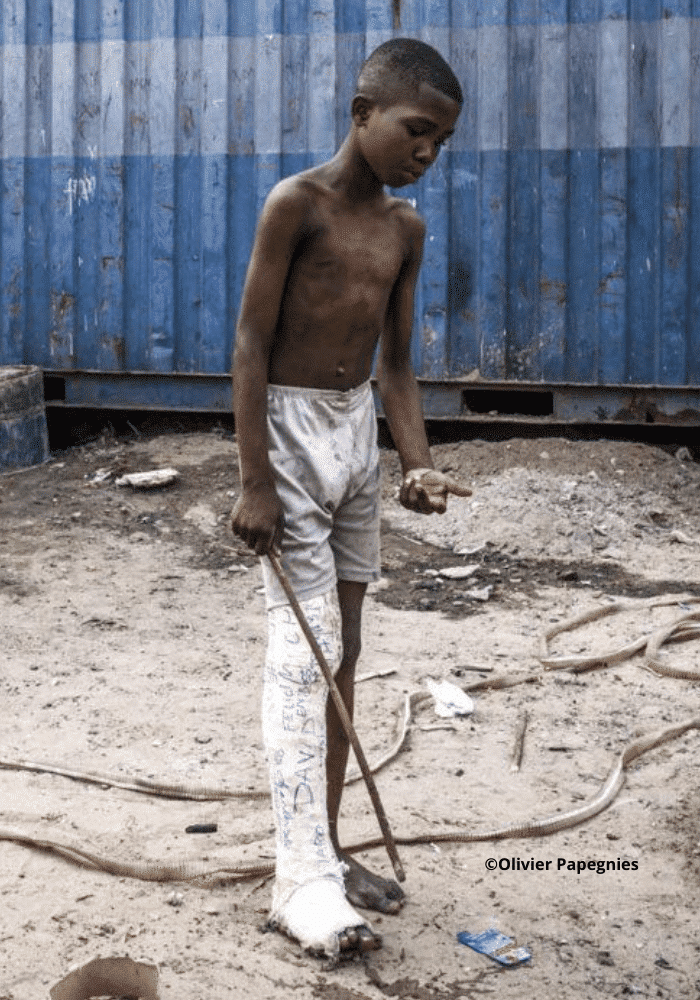
This is the third time a site for internally displaced persons has been bombed indiscriminately in less than six months, killing at least 18 people and injuring 32 others. INGOs strongly condemn this indiscriminate bombing, which violates international humanitarian law.
Overcrowded displacement camps are no longer safe spaces for civilians, particularly for women and children. In addition to indiscriminate bombings, the proximity of heavy artillery to the camps and the widespread presence of armed elements within the sites have led to an increase in security incidents, endangering both affected populations and humanitarian workers.
Fighting has also intensified in the neighboring province of South Kivu, where over 500,000 internally displaced persons sheltered in Minova are also exposed to the risk of bombing and insecurity, leading to recurrent forced displacements. After fleeing extreme violence, men, women, and children arrive at the sites in disastrous financial, physical, and psychological conditions, only to face additional risks, including sexual and gender-based violence, due to the presence of armed elements.
“Insecurity daily hinders humanitarian aid access, depriving the population of the much-needed assistance.”
Although humanitarian organizations report a rising number of assaults and murders, including an average of 50 incidents of sexual and gender-based violence in the camps per week, the situation has significantly worsened. In April alone, over 5,000 people sought psychosocial support in camps 1 and 2 of Lushagala, with many reporting sexual violence within less than 72 hours. Moreover, insecurity daily hinders humanitarian aid access, depriving the population of the much-needed assistance.
INGOs have continuously advocated for the protection of civilians as the conflict in North and South Kivu escalates in total disregard of the Luanda peace process. In the first quarter of 2024, the monthly average of artillery fire caused two and a half times more civilian casualties than at the end of 2023.
As indiscriminate attacks on displacement sites become more frequent, the humanitarian toll has reached a breaking point while aid delivery becomes increasingly difficult. This is not the time to look away. We call for an immediate cessation of hostilities and urge all parties to the conflict to respect international humanitarian law and protect civilians.
The international community has a responsibility to urgently use all diplomatic means at its disposal to facilitate a political solution to the conflict. The various parties to the conflict must protect the population, civilian facilities, and allow neutral, impartial, safe, and unhindered humanitarian access so that the population, currently in a situation of vulnerability, can be cared for.
EDITOR’S NOTES
- Although humanitarian organizations report a rising number of assaults and murders, including an average of 50 incidents of sexual and gender-based violence in the camps per week, the situation has significantly worsened. In April alone, over 5,000 people sought psychosocial support in camps 1 and 2 of Lushagala, and many reported sexual violence within less than 72 hours. Moreover, insecurity daily hinders humanitarian aid access, depriving the population of the much-needed assistance.
- INGOs have continuously advocated for the protection of civilians as the conflict in North and South Kivu escalates in total disregard of the Luanda peace process. In the first quarter of 2024, the monthly average of artillery fire caused two and a half times more civilian casualties than at the end of 2023.
- As indiscriminate attacks on displacement sites become more frequent, the humanitarian toll has reached a breaking point while aid delivery becomes increasingly difficult. This is not the time to look away. We call for an immediate cessation of hostilities and urge all parties to the conflict to respect international humanitarian law and protect civilians.
- The international community has a responsibility to urgently use all diplomatic means at its disposal to facilitate a political solution to the conflict. The various parties to the conflict must protect the population, civilian facilities, and allow neutral, impartial, safe, and unhindered humanitarian access so that the population, currently in a situation of vulnerability, can be cared for.