
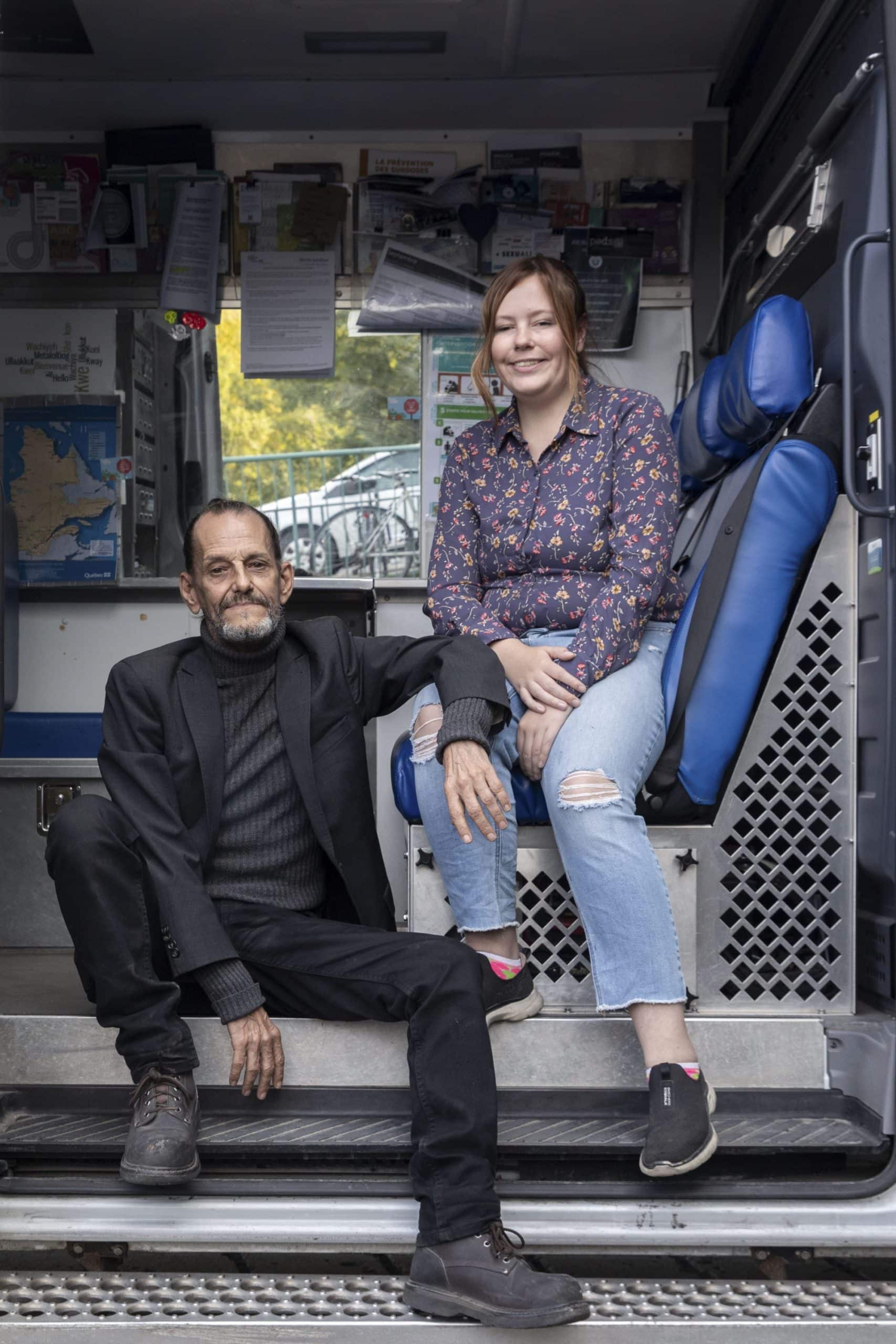
Farin and Andréanne work on board Médecins du Monde’s mobile clinic: the small van that crisscrosses the city and returns “to the same spots every two weeks, rain or shine.” The duo offers a global health approach to those the system fails to reach.
For people experiencing homelessness, those who use substances, or sex workers who come to see them, Farin and Andréanne combine their expertise. The goal: to define a range of options that allow patients to “find, within the spectrum of solutions, the one that best meets their needs […]”, explains Farin. “It’s never about finding the right solution, but rather how many options exist for the person to ultimately arrive at something that makes sense for them.”
This spectrum of solutions is established by the peer support worker in harm reduction and the clinical nurse by also drawing on their life experiences. Andréanne’s role first involves “assessing the medical situation to ensure the person is healthy and able to function,” but it doesn’t stop there. Having lived among people with substance use issues enriches her perspective and allows her to welcome marginalized and stigmatized populations into the clinic with respect and kindness.
Like Farin, Andréanne adopts a stance of radical acceptance. This means acknowledging that “the person in front of us won’t stop using just because they have an abscess.” The nurse adds: “Suggesting they review their consumption techniques because their veins are damaged—that’s truly a sign of respect for the person.” A key attitude to ensure a positive care experience and gradually build a relationship of trust with patients. It’s all of this combined that ultimately promotes better access to health care for everyone.
Farin, for his part, draws on his experiential knowledge of substance use and an adolescence partly spent on the street. Because he knows better than any what it means to have had “a difficult childhood.” Farin trusts in his ability to “share and create connections with those who are outside social norms.” That’s how the populations the duo supports will return to the clinic when they need it, without fear of being judged. Because, as Farin says: “Care happens before, during, and after a consultation. […] Time and kindness are also part of care.”