
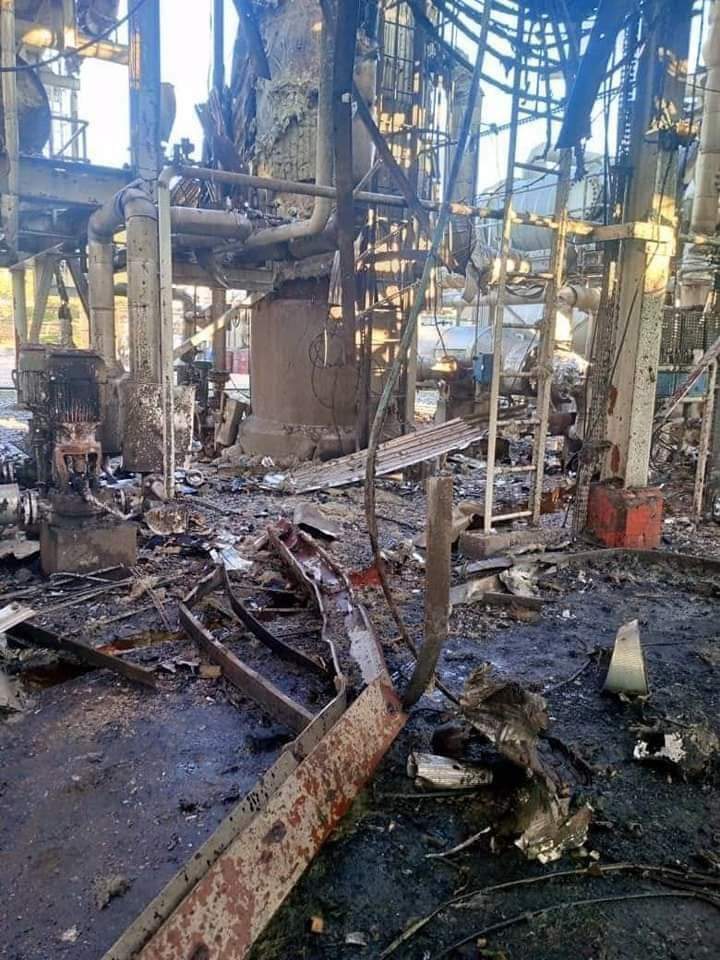
The most recent escalation of attacks has expanded its targets to include access routes frequently used by humanitarian personnel. With water and electricity infrastructure having been severely damaged by the October attacks, the current escalation has devastated what remained of several essential civilian infrastructures.
Between January 13 and 16, 2024, 40 attacks were confirmed in northeastern Syria, and at least six civilians were injured during this escalation alone, while at least 26 key buildings and structures were hit or rendered unusable. At the height of the escalation, on January 15, 92% of humanitarian actors providing vital services, particularly in the areas of health, nutrition, water, sanitation, and hygiene, reported facing movement restrictions in the region.
The NES Forum calls on all parties to the conflict to immediately cease all hostilities and urges the international community to recognize the violations of international humanitarian law occurring in northeastern Syria.
The principles of international humanitarian and human rights law guarantee the protection of civilian lives, property, and infrastructure.
Attacks against civilians and civilian property constitute a violation of customary international humanitarian law and oblige states to put an end to such violations. Humanitarian organizations cannot respond to the level of devastation caused by each escalation of hostilities. It is essential that these attacks be condemned, that damaged infrastructure be repaired, and that civilian lives be protected.
The damage to energy infrastructure from this latest series of airstrikes will further reduce civilians’ access to water and electricity. Six power plants were hit during this series, and a major fuel station, Swediyeh, which serves over 920,000 people, was rendered completely inoperative. Four electricity transfer substations in Hasakah were completely knocked out of service. As a result, the Alouk water station is now completely cut off from the grid: 96 wells in the region are non-operational, and the remaining 80 risk running out of fuel to function, threatening water access for over 815,076 people in northeastern Syria.
Dozens of facilities that relied on Swediyeh’s supply, including water stations, health infrastructure, and other vital services, are now without electricity. Over 38 bakeries have ceased operations, along with several silos and mills. Swediyeh was also the sole gas producer in the NES region, leading to an immediate halt in cooking gas production. The attack on a transfer station in Ain Al Arab caused a widespread power outage in the city, in 400 surrounding villages, and in 150 villages in Ain Issa. Over a million residents in eleven major cities and towns, as well as in over 2,750 villages, and 1,900 schools are without electricity.
Without water, light, or healthcare
The risk of being deprived of drinking water, cooking fuel, and heating could lead to preventable deaths. The transport of basic items such as medical supplies and food baskets, as well as the power supply to key facilities like health centers and the operation of medical equipment, will also be affected.
The attacks have also led to the suspension of diesel and paraffin production and distribution, the most commonly used heating fuels in winter. On January 16, the national oil supplier indicated that all operations and fuel production had been suspended, meaning no fuel is available or being distributed, including in facilities of the Autonomous Administration of North and East Syria (AANES). Shortages are already being reported in the Jazeera region, where generators are operating on reduced hours.
Displaced persons camps were informed on January 15 of an immediate and indefinite suspension of fuel distribution, leaving residents without means to cook or heat their homes in the coming days. Additionally, thousands of farmers depend on fuel to operate irrigation equipment, further threatening the fragile food security and livelihoods in the region.
NGO operations cannot be guaranteed
Humanitarian organizations themselves will face increasing difficulties in delivering much-needed support to communities as resource availability dwindles and costs rise. Shortages, heightened operational risks, and security concerns for both staff and beneficiaries will make it impossible to guarantee the continuity of NGO services without a solution to current constraints or a cessation of hostilities.
The damage sustained by civilian infrastructure to date cannot be repaired solely through the humanitarian response. Organizations are limited both by the scarce resources at their disposal and by political constraints. The scale of destruction requires large-scale repairs, and the impact of lasting losses of electricity, fuel, and water cannot be covered by programs that are already struggling to meet long-standing needs.
The NES Forum calls on the international community to negotiate a political solution and put an end to the relentless attacks on civilian infrastructure. Investments in the region and the humanitarian response are constantly undermined, and the safety of civilians and humanitarian workers is increasingly at risk.
Translated from the website of Médecins du Monde Spain: medicosdelmundo.org