Increase in Attacks Against Humanitarian Workers
In 2024, as armed conflicts multiply and intensify, 299.4 million people worldwide require humanitarian assistance. To provide vital aid to these populations severely affected by conflict, humanitarian and health personnel are working in increasingly dangerous environments. In 2023, according to the Aid Worker Security Report, it is estimated that 595 humanitarian workers were victims of attacks and violence worldwide, including 280 killed, 224 injured, and 91 kidnapped. This marks a grim record, with the number of humanitarian workers killed by violence being the highest ever recorded.
International humanitarian law (IHL) and humanitarian principles form the foundation for the protection of humanitarian actions and medical missions. However, despite these protections, the challenges to ensuring the safety of humanitarian workers and health professionals in armed conflicts are growing.
In many countries such as Palestine, Sudan, Ukraine, Yemen, Afghanistan, and several other locations around the world, we are witnessing not only an escalation but also a normalization of violence against humanitarian workers, who are being deliberately targeted.
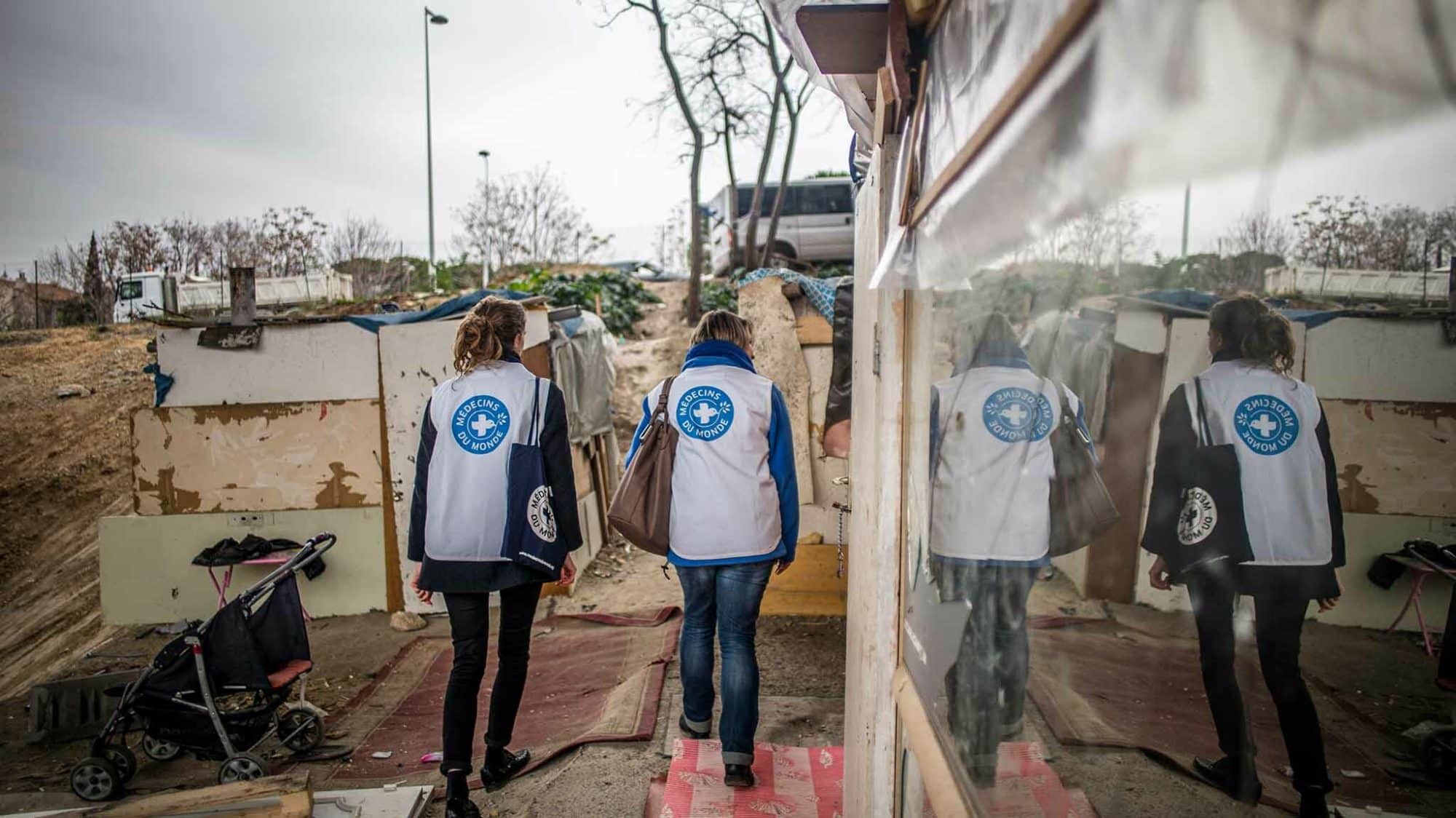
“The situation is critical and undermines our ability to intervene at a time when needs are more urgent than ever. We need a concerted approach from all actors. States, including Canada, as well as the international community, must also share responsibilities. Let us act together to reduce the risk burden on first responders; this is a priority,” stated Nadja Pollaert, Executive Director of Doctors of the World Canada.
In 2023, Doctors of the World, Humanity & Inclusion, and Action Against Hunger published a report titled “The risks we face are beyond comprehension: strengthening the protection of humanitarian and medical personnel”. This report highlights the main challenges and demands from organizations to ensure the safety of humanitarian and health personnel.
Call for Concrete Actions and Priorities
We call on parties to conflicts, as well as states, the United Nations, donors, and the humanitarian community, to take urgent action to protect humanitarian and health personnel from all forms of violence, including by condemning these violations and combating impunity.
The humanitarian system relies on local staff, who account for 95% of victims, as they are on the front lines where needs are greatest. Yet today, these personnel are the least protected, equipped, and supported. We demand that states and international NGOs share resources and prioritize support for local organizations so they can manage their own security.
To ensure the safety of their staff, organizations must implement strategies to both prevent and respond to risks. This means, for example, equipping their personnel, providing training, or having dedicated staff for security management. We call on aid funders to systematically finance the costs associated with security management and support for targeted and victimized humanitarian workers.
It is also urgent to increase financial resources and technical expertise to support the mental health of humanitarian and health workers facing or having faced such violence. We must enable free access to legal and psychological assistance for survivors and the families of victims.
It is essential to place victims and survivors of attacks at the heart of awareness-raising and protection efforts, as their testimonies are powerful tools for communicating unmet needs and mobilizing stakeholder support.
“Without protection for humanitarian personnel, there can be no effective humanitarian aid for civilian populations, who are the primary victims of conflicts. We call on states to address the near-total impunity enjoyed by perpetrators of attacks and to increase legal assistance for survivors and the families of victims, so that perpetrators are gradually brought to justice. We call on donors and NGO leaders to invest in mental health support for humanitarian workers, who are increasingly exposed to traumatic events. Initiatives such as Protect Humanitarians aim to give a voice to local humanitarian workers in global advocacy efforts for the protection of humanitarian workers,” explained Olivier Vandecasteele, humanitarian worker and founder of Protect Humanitarians.
Beyond the toll on humanitarian and health workers, this escalation of violence also has a significant impact on civilian populations trapped in conflict. These populations are not only victims of increasingly prolonged conflicts and more complex emergencies but are also sometimes deliberately deprived of vital humanitarian assistance and protection.
Humanitarian and health workers must be better protected as soon as possible so that vital needs and care can continue to be provided to civilian populations affected by these armed conflicts.
Media Contact:
Mélissa Cabana, Director of Communications
Doctors of the World Canada
melissa.cabana@medecinsdumonde.ca
514-799-8985