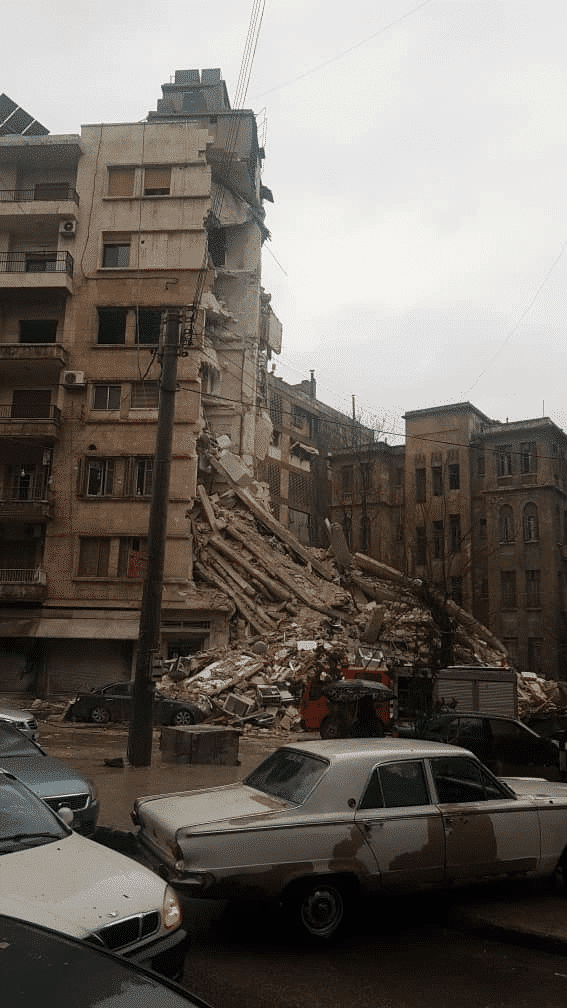
The earthquakes that struck Syria and Turkey on February 6, 2023, caused the death of at least 35,000 people and affected millions. Médecins du Monde is calling for unhindered access to those most in need and rapid financial mobilization to save lives and support survivors.
On the Turkish side, a large number of buildings and roads were completely destroyed. The populations affected by the earthquake are struggling to access basic infrastructure and services such as water, electricity, and shelter. Meanwhile, rescue teams are still working to reach all those affected.
The situation is particularly difficult in northwestern Syria, where 4.1 million people already depend on humanitarian aid due to 12 years of conflict. The harsh winter adds an unbearable burden to an already catastrophic situation. Many buildings and shelters have been destroyed, and health facilities, already insufficient, are no longer operational: hospitals are damaged and overcrowded, and all of MdM’s clinics in the region have been partially or completely destroyed. Many healthcare professionals have stopped working because they must deal with the consequences of the disaster for themselves and their families.
Urgent need to provide adapted medical response.
Health services must be quickly restored to ensure basic care. Otherwise, cascading consequences could worsen the situation, particularly in areas already experiencing cholera epidemics and nutritional problems. Specific needs of women and children must be addressed, with particular attention to sexual and reproductive health. Psychological needs, especially regarding the management of anxiety and post-traumatic stress disorders, continue to rise. Medical kits and first aid kits containing winter clothing, surgical consumables, blankets, and mattresses are among the most pressing needs.
The catastrophic situation at the Turkish border with Syria is impacting the ability of humanitarian organizations to provide aid to northwestern Syria. The Turkish province of Hatay, where MdM Turkey’s regional office is located, was one of the main hubs for delivering humanitarian aid to Syria. The devastation in the region further reduces our capacity to provide aid to the Syrian population.
MdM is currently scaling up its emergency operations in all regions affected by the disaster. We are preparing to provide long-term support to populations in need.
At present, we are responding to the emergency by providing first aid and psychosocial support. Within the first 24 hours, we deployed our field teams to the Turkish province of Hatay to support the emergency response. We have also begun supporting the population in Idlib, Afrin, and Jandaris on the Syrian side of the border.
We are now calling on the international community to redouble its efforts:
All relevant stakeholders, including the Turkish and Syrian governments, the UN, and the international community, must ensure that humanitarian access to those affected by the disaster is unhindered, in accordance with humanitarian principles:
- Statements must translate into action to guarantee unhindered access to all regions in need of humanitarian aid, without political consideration. These efforts must be supported by the international community.
- Humanitarian aid delivery to Syria, including the entry of materials, goods, and professionals, and the evacuation of injured persons from Syria, must be facilitated.
- All relevant stakeholders must work to open additional border crossing points besides Bab Al Hawa.
- The Syrian government must ensure the opening of safe and unrestricted crossing points between government-controlled and non-government-controlled Syrian regions to allow the passage of humanitarian aid provided by humanitarian organizations to address the immense needs of the population.
The United Nations and donors must strengthen their financial support to the affected regions, from a comprehensive perspective:
The Whole of Syria approach must guide funding flows to ensure they meet needs in the most relevant way.
Additional funding must be made available to responders in the affected regions, with a focus on all health needs, including psychological first aid and the Minimum Initial Service Package (MISP) for reproductive health.
Additional funding must prioritize local organizations, which were and remain the first to respond to the crisis.
Donors and the international community must immediately invest in programs aimed at restoring basic infrastructure in all disaster-affected regions. Special attention must be given to water access and health infrastructure, as well as developing a plan to support the affected regions in the long term.
Médecins du Monde in the region
In Turkey:
- Since 2015, Médecins du Monde has been implementing programs in Antakya to provide refugees and migrants with free access to health care and mental health and psychosocial support (MHPSS) services.
In Syria:
- Since 2018, in northwestern Syria, Médecins du Monde has been providing primary health care, sexual and reproductive health services, and MHPSS in 14 health facilities and one Basic Emergency Obstetric and Newborn Care center. MdM is also responding to epidemics and the current nutritional crisis.
- Since August 2022, Médecins du Monde has been working in government-controlled regions through several partners, providing technical support in primary health care, MHPSS, and through mobile clinics and teams.