
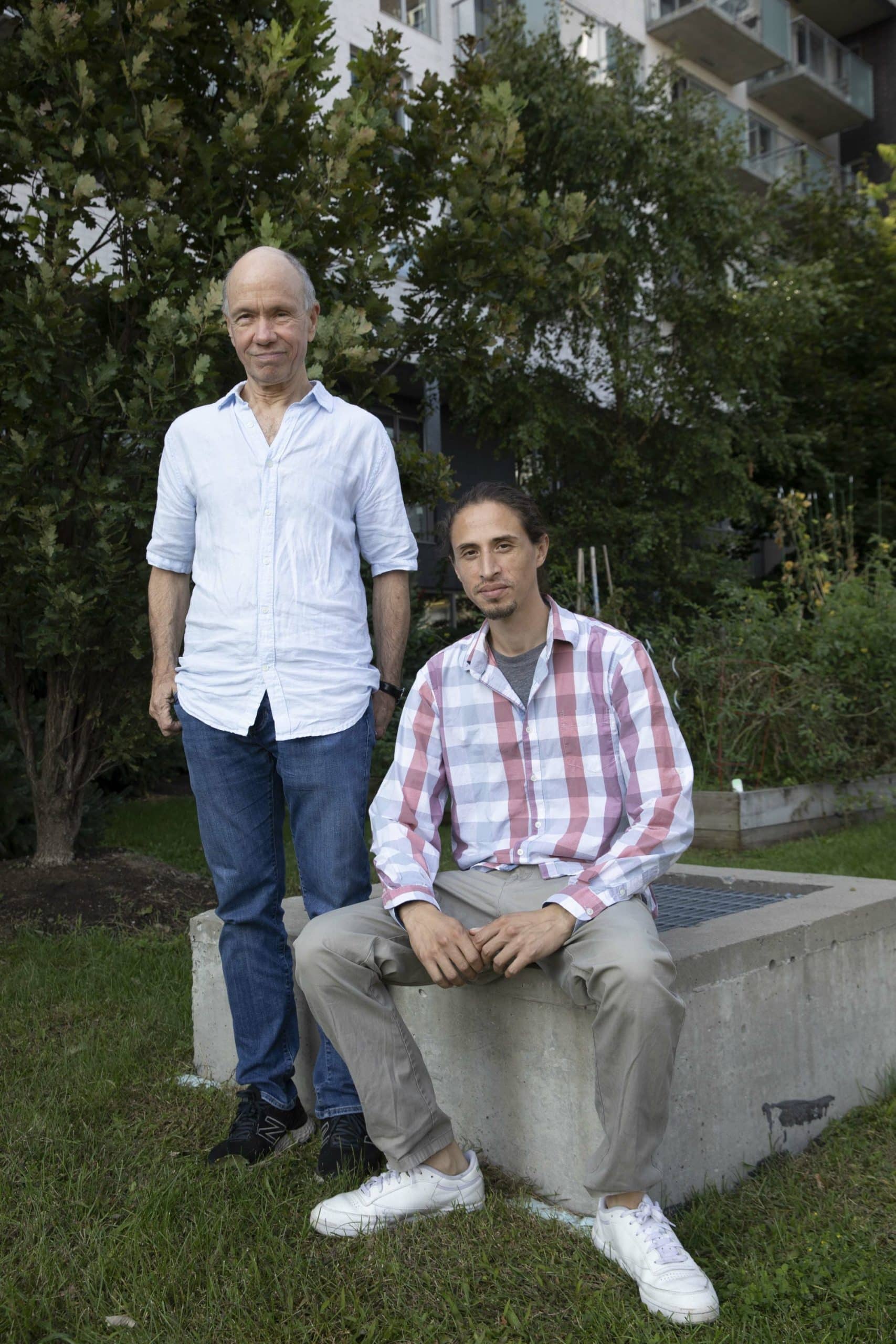
As for Thierry, now a coordination officer for engagement, he spent a long time on the front lines, working in harm reduction with people described as disenfranchised. Disenfranchised, because the bond between them and the rest of society has broken, if not significantly weakened over time. Despite their different realities—living as a person experiencing homelessness, engaging in sex work, or struggling with addiction issues—these users, “without an apartment or family,” often share the common experience of having “cut ties for all sorts of traumatic reasons,” explains Pierre. “Physical and sexual abuse… it’s commonplace.”
The role of field workers like Thierry is precisely to rebuild that broken bond: “[Establishing] contact with someone, hearing their life story, is a starting point toward, we hope, reconnecting with other people, community organizations, outreach workers, and other users,” the psychologist continues.
A role that is necessary but comes with its share of consequences. Thierry was not spared: “I experienced burnout. It was in that context that I turned to Médecins du Monde. I knew about their services thanks to Pierre, who provided monthly clinical supervision to my team.”
Thierry’s work is first and foremost based on active and compassionate listening, without judgment. “It’s a humanist approach where we welcome the other as they truly are, without stopping at first impressions.” This stance builds enough trust for people to open up about their life journey and express the distress that comes with it. Active listening also carries a heavy emotional burden for care teams. This is compounded by exposure to verbal, and sometimes physical, violence, which is common in social work.
Is it possible to care for marginalized people without being affected? Pierre is clear: “It’s inevitable. […] We are affected by the traumas that people carry within them.” The consequences can be severe for outreach workers. Burnout and compassion fatigue sometimes lead to changes in service or even career reorientation. It is to prevent this exhaustion and support outreach workers in managing the emotional toll of their work that Médecins du Monde has set up support services for them.
Thierry went through that. After several years on the front lines distributing safe supplies, the outreach worker decided to move into a role he considers more positive. He explains simply: “I did that for too many years, and in a way, it wore something out in me.” Now, Thierry provides support to the same populations as before, but for paid social engagement.
As Pierre and Thierry discuss their journeys, the necessity becomes clear: this space for dialogue between psychologists and intervention teams is essential. For the latter, it serves as a release valve through which they can “reconnect with their inner world and […] let go of some of the things seen or heard” in their work. It is what enables them to continue building connections with people excluded by the healthcare system. Without ever judging them.